REVIEW · SEMINYAK
Taste & Explore Bali: Denpasar Street Food & Historic Sites
Book on Viator →Operated by Intrepid Urban Adventures - Indonesia · Bookable on Viator
Bali street food comes with a story. This 3-hour Denpasar walk pairs a few sacred and colonial-era stops with real night-market eating, so you’re not just grazing—you’re getting the cultural why behind each bite. I love the small group size (up to 12) because the pace stays relaxed, and I especially like that you start at Pura Agung Jagatnatha before the food part heats up.
The downside to know up front: this tour is very local-food focused, and it can’t reliably accommodate vegetarian, vegan, or gluten-allergy needs. If you’re traveling with strict dietary limits, you may need to plan around what’s available at the stalls.
If you want a focused way to see central Denpasar—temple calm, resistance history, then pork-and-meatball comfort—this one fits the bill.
In This Review
- Key things to know before you go
- 4pm Denpasar streets: what this 3-hour walk is really like
- Pura Agung Jagatnatha first: temple etiquette and why it matters
- Puputan Square and Patung Catur Muka: the landmarks between bites
- Jalan Gajah Mada food lanes: Babi Guling and Bakso in one route
- Babi Guling
- Bakso
- Badung Market and night snacks: Jaje Bali and local ordering tips
- NADHI Heritage coffee finish: how to make your last stop count
- What the guide adds (and why it makes the food better)
- Price and value for $45: what you really get
- Who this Denpasar street food and history tour suits best
- Quick practical tips so you eat comfortably
- Should you book Taste & Explore Bali: Denpasar Street Food & Historic Sites?
- FAQ
- What time does the tour start in Denpasar?
- How long is the Taste & Explore Bali tour?
- Where do I meet and where does the tour end?
- What food will I get to try?
- Is this tour suitable for vegetarian, vegan, or gluten allergy diets?
- Can children under 6 join the tour?
- How many people are on the tour?
- What’s included in the price, and is extra food covered?
- Can I cancel for a full refund?
Key things to know before you go
- 4pm start keeps you in evening market hours while the historic stops stay comfortable
- Up to 12 people for a more personal walking pace through central Denpasar
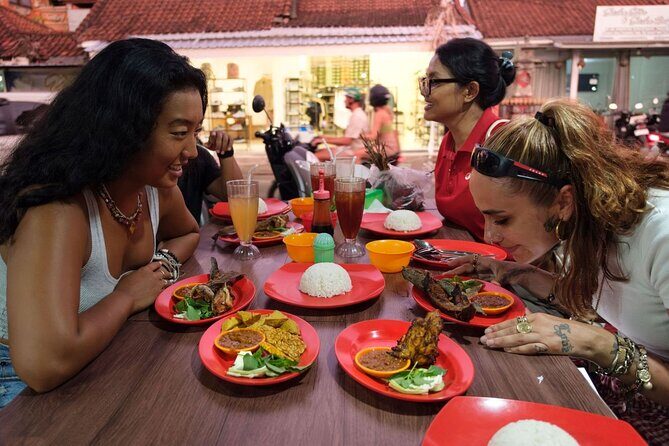
- Babi Guling + Bakso are the headline tastings, tied to local ceremony and everyday food
- Local vendors at market stalls: you’re buying directly from people who cook for a living
- Coffee at NADHI Heritage finishes the tour in a simple, satisfying way
4pm Denpasar streets: what this 3-hour walk is really like
This tour starts at 4:00 pm in central Denpasar, and it runs about 3 hours on foot. You’ll move between a temple, a couple of major landmarks, and then night-market food areas where you can actually see everyday life happening around you. It’s designed for people who want food with context, without turning the evening into a checklist sprint.
You’ll get a guided walking tour (with a mobile ticket), and you’ll also have a moment to pause and look around—especially at the historic sites—before you’re back to eating. The whole point is that the food is not floating in space. It sits inside Balinese culture: rituals, neighborhood commerce, and the way people treat daily meals.
If you're still narrowing it down, here are other tours in Seminyak we've reviewed.


Pura Agung Jagatnatha first: temple etiquette and why it matters
Your tour begins at Pura Agung Jagatnatha. It’s described as a central Hindu temple, and even with the short stop (about 15 minutes), it sets the tone fast. This isn’t the kind of stop where you’re rushing for photos and moving on; it’s more about getting grounded in what’s sacred in Denpasar before you hit the street food.
A practical note: you’ll want to dress respectfully. Even if you’re only there briefly, temple spaces usually reward visitors who show basic politeness—covered shoulders, neat clothing, and calm behavior. I also like that the tour starts here because it reminds you that “street food” isn’t separate from religion and community. Food and ritual are closely connected in Bali.
One more win: the admission is listed as free, so the temple stop doesn’t become a money or time headache.
Puputan Square and Patung Catur Muka: the landmarks between bites
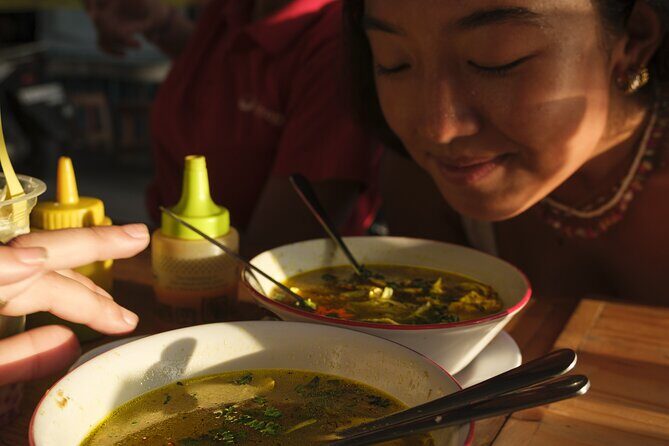
After the temple, you’ll head to Puputan Square, where you learn about Bali’s 1906 resistance against colonial rule. There’s also a symbolic 0 km landmark, which gives the area a “center of things” feeling. You’re not reading a history poster by yourself—you’re standing in a place that carries meaning.
Next is Patung Catur Muka (the four-faced god statue). This is another 15-minute stop with free admission. It’s also a photo magnet, but the value is the explanation of what you’re seeing—because the statue and the surrounding landmarks connect to how Balinese culture expresses worldview through symbols.
These landmark stops are short, but they matter. Without them, the rest of the evening could feel like a simple food crawl. With them, you’ll understand why certain foods show up at certain times and why markets are more than just places to eat.
Jalan Gajah Mada food lanes: Babi Guling and Bakso in one route
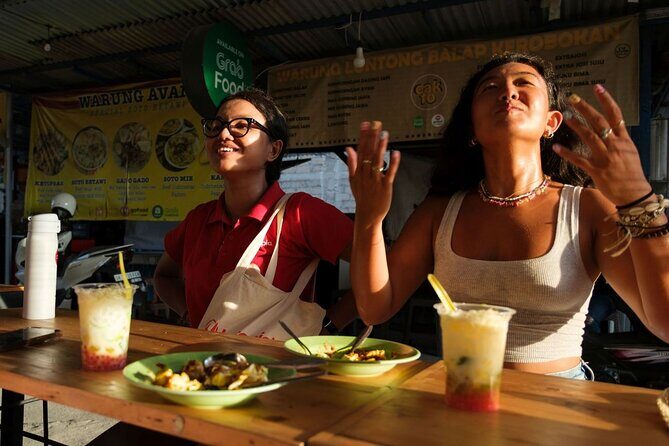
Then the tour shifts to Jalan Gajah Mada, a heritage street lined with colonial buildings and local shops. This part is about 30 minutes, and it’s where the food focus starts getting real.
The headline dishes here are Babi Guling and Bakso.
Babi Guling
Babi Guling is Bali’s signature roasted pork dish, typically made in a ceremony context. The tour frames it as something traditionally served only at ceremonies—so tasting it during a walking tour gives you a glimpse of something that usually isn’t everyday-only. You’ll get to try it as part of how the guide explains local customs, not just as a “food item.”




Bakso
Bakso is an Indonesian meatball soup that’s widely loved. It’s a comforting counterpoint to roasted pork—warm, filling, and easy to eat while you’re walking. The tour pairing makes sense: you get a heavier ceremonial dish and then a soothing bowl to balance it.
This section also includes browsing time—so you’re not only sitting and eating. You’re seeing the street life around the food, which helps the evening feel grounded rather than staged.
Badung Market and night snacks: Jaje Bali and local ordering tips
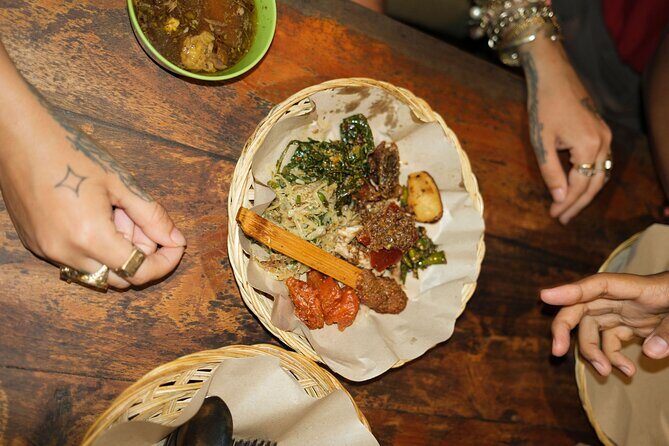
Your next stop is Badung Market Dempasar Bali, another 30-minute chunk that’s all about market energy and street-level food. This is where the tour leans into classic Balinese snack culture.
You’ll sample Jaje Bali, which the tour describes as traditional Balinese sweets—often colorful, made from rice flour and coconut. Market snacks like these are where you learn to think in textures and flavors rather than looking for “one perfect dish.” Some bites are sweeter; some are chewy; some are coconut-forward. The fun is that they’re small enough to sample without committing your whole evening to one taste.
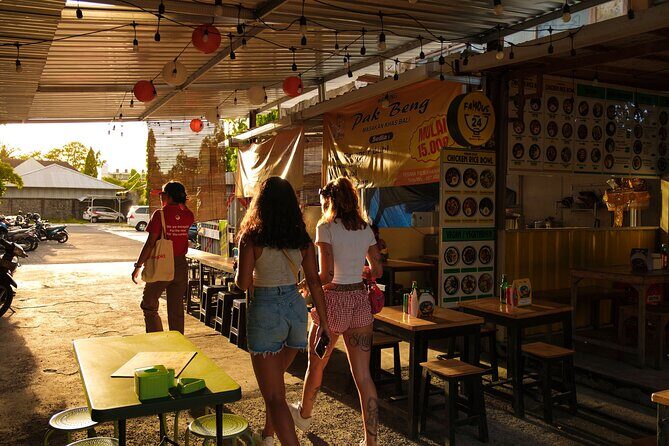
One thing I really like here: the tour is set up so the food you eat is prepared at the venues you visit, and the vendors are local people selling food for a living. That means your money goes where it’s needed—directly into neighborhood hands—rather than being swallowed by a big, generic tourism machine.
NADHI Heritage coffee finish: how to make your last stop count
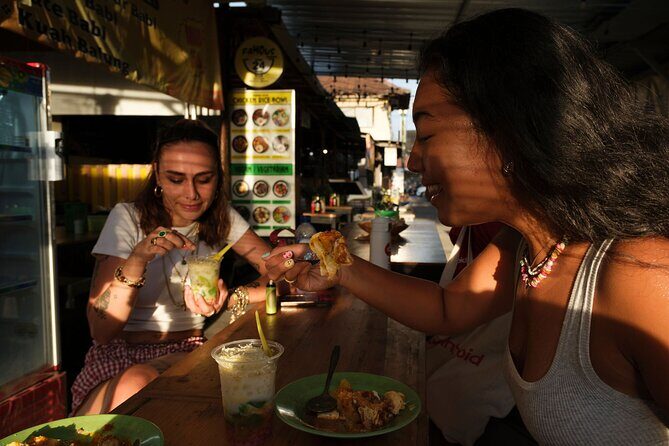
The tour wraps at NADHI Heritage on Jalan Gajah Mada (listed as part of the ending area). This last stop includes about 30 minutes for an authentic Indonesian Arabica coffee, served hot or iced.
This is a smart finish. By the time you reach coffee, you’ve already had roasted pork, meatball soup, and a run of snack bites. Coffee gives you a clean reset—caffeine, aroma, and a chance to slow down after the walking.
If you’re the type who likes to review what you ate, this is where it helps. Take a moment, ask your guide what you should remember about the flavors and why they’re made that way. Then you’ll be better equipped to order confidently later on your own.
What the guide adds (and why it makes the food better)

The guide factor is a big part of why this tour is rated well. From past tour experiences tied to this route, I’ve seen names like Putra, Lena, Irfan, and Srix associated with the guiding team. The common thread is that the explanation isn’t stuck in trivia mode.
Instead, it connects food to place: what you’re eating, where it comes from locally, and how it fits Balinese life. That’s especially useful with Babi Guling, since the tour positions it as ceremony-linked. If you’re just buying it as a tourist item, the dish can feel like a random novelty. With guidance, it becomes a window into how people think about food, occasion, and community.
Price and value for $45: what you really get
At $45 per person for about 3 hours, the value comes from two places: what’s included and how focused it is.
Included food moments include Babi Guling and Bakso, plus Jaje Bali and street snacks at the market, and a coffee stop at the end. Also included: visits to Pura Agung Jagatnatha and Puputan Square, plus free-entry landmark time at Patung Catur Muka. The tour also includes the guided walking component.
What’s not included is also clear: additional food and drinks and gratuities. That means if you’re someone who likes to keep sampling beyond what’s planned, you’ll pay extra. But if you’re happy with a guided set of tastings, $45 is a reasonable “all-in” number for an evening that combines food and sight-walking.
Given that the tour is capped at 12 people, you’re paying for a real guide-led experience rather than a mass-market group shuffle.
Who this Denpasar street food and history tour suits best
This is a great match if you:
- Want Balinese street food in a structured way (not wandering hungry and confused)
- Care about the meaning behind dishes like Babi Guling
- Prefer a small group walking pace in central Denpasar
- Like history that’s connected to what you can actually see on the street
It’s not a great match if you need:
- Vegetarian or vegan options (the tour says it can’t reliably cater)
- Gluten-free support (also not catered for)
- Travel with kids under 6, since the tour states they aren’t permitted
Also, if you’re sensitive to pork and meat-based foods, pay attention. The tour’s core tastings are built around local favorites—especially Babi Guling and meatball soup—so this is not a “try a salad and sip tea” kind of tour.
Quick practical tips so you eat comfortably
You’ll be walking between multiple stops, so plan for:
- An evening start at 4:00 pm—eat a light early dinner or snack beforehand only if you need to
- Comfort clothing for temples and markets (temple etiquette plus street eating)
- A realistic expectation: this is local food, and you may not see the kind of English labeling you’re used to
Since the tour includes multiple tastings, you don’t need to “save room” for every possible stall—just follow the guide’s timing and pace. If you finish a dish early, you’ll still have time later for small snacks.
And keep an eye on your coffee choice: it’s Arabica and can be hot or iced, so choose based on whether you want a warm end or something refreshing.
Should you book Taste & Explore Bali: Denpasar Street Food & Historic Sites?
Yes, I’d book it if your Bali plan includes Denpasar and you want one evening that ties together temple sights, resistance-era landmarks, and real street food. The itinerary is short, but the combination is smart: you start with a sacred context, you stand at meaningful historic points, then you earn your dinner through market tastings.
I’d think twice if your diet is highly restricted or if you dislike meat-heavy dishes. Since the tour can’t reliably accommodate vegetarian/vegan diets or gluten issues, it may feel frustrating instead of fun.
If you’re ready to spend an evening learning how Balinese culture shows up in what people cook and sell, this one is a solid value at $45—especially with the small group size and the guided explanations at each stop.
FAQ
What time does the tour start in Denpasar?
The tour starts at 4:00 pm.
How long is the Taste & Explore Bali tour?
It runs for about 3 hours.
Where do I meet and where does the tour end?
You meet at Agung Jagatnatha Temple on Jl. Surapati No.7 in Denpasar Tim. The tour ends at NADHI Heritage on Jl. Gajah Mada No.122, Pemecutan / Dauh Puri Kangin area in Denpasar Bar / Utara.
What food will I get to try?
The included tastings are Babi Guling and Bakso, plus Jaje Bali snacks and street food at Badung Market, and an included cup of Indonesian Arabica coffee.
Is this tour suitable for vegetarian, vegan, or gluten allergy diets?
The tour says it does its best, but it can’t reliably cater for vegetarian, vegan diets, or gluten allergies/intolerances.
Can children under 6 join the tour?
No. The tour states it is best suited for adults and older children, and little ones under 6 aren’t permitted.
How many people are on the tour?
The tour has a maximum of 12 people.
What’s included in the price, and is extra food covered?
The price includes guided walking, the temple and landmark visits listed, tastings (including Babi Guling and Bakso), market snacks, and coffee. Additional food and drinks are not included.
Can I cancel for a full refund?
Yes. You can cancel up to 24 hours before the experience start time for a full refund.