REVIEW · SEMINYAK
The Fantastic East Of Bali Private Guided Tour
Book on Viator →Operated by Seminyak Tour Driver Bali · Bookable on Viator
East Bali tells its story in motion. This private day trip from Seminyak focuses on Bali’s Hindu culture, with temple visits, a village-style look at daily tradition, and photo-worthy stops that feel tied to real life, not just postcards.
I love the door-to-door pickup and the comfort of an A/C vehicle, plus your English-speaking guide who also drives. I also like the included practical touches: a Balinese sarong costume, mineral water, and light snacks and refreshments so your day stays smooth.
One consideration: most entrance tickets are not included, so you’ll want to set aside some extra cash for the temples and attractions you stop at. Add in some walking (temples and a cave route), and it helps to wear shoes you’re happy to get a bit dusty.
In This Review
- Key points to know before you go
- Why this private East Bali day feels personal
- Price and logistics: entrance tickets and timing
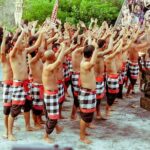
- Stop 1: Guwang Barong & Keris Dance and the meaning behind the gamelan
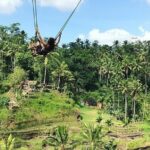
- Stop 2: Happy Swing Bali in Tegalalang and rice-terrace photo timing
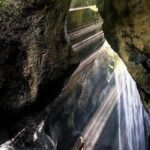
- Stop 3: Tukad Cepung Waterfall—cave walking and when photos work
- Stop 4: Lereng Agung restaurant lunch and Balinese coffee sampling
- Stop 5: Besakih mother temple, plus Goa Lawah and water palaces
- Stop 6 and 7: Bukit Jambul views toward Nusa Penida, then Kertha Gosa Park history
- Bukit Jambul viewpoint
- Kertha Gosa Park in Klungkung
- Who this tour suits best (and who should skip it)
- Should you book this Fantastic East Of Bali Private Guided Tour?
- FAQ
- How long is the Fantastic East Of Bali Private Guided Tour?
- Is pickup and drop-off included?
- Are entrance tickets included in the price?
- Is lunch included?
- Does the tour include a swing experience?
- What happens if weather is bad?
- Can I get a full refund if I cancel?
Key points to know before you go
- Private guide and vehicle means you can move at a pace that suits your group
- Gamelan dance with a karma story at Guwang Barong & Keris sets a meaningful tone early
- Tukad Cepung waterfall is a cave walk plus natural light photo moment
- Besakih mother temple gives you the big-picture context for Hindu Bali
- Bukit Jambul is a short stop with a wide view toward Nusa Penida and Lombok
- Kerta Gosa Park adds the East Bali history angle beside the museum
Why this private East Bali day feels personal
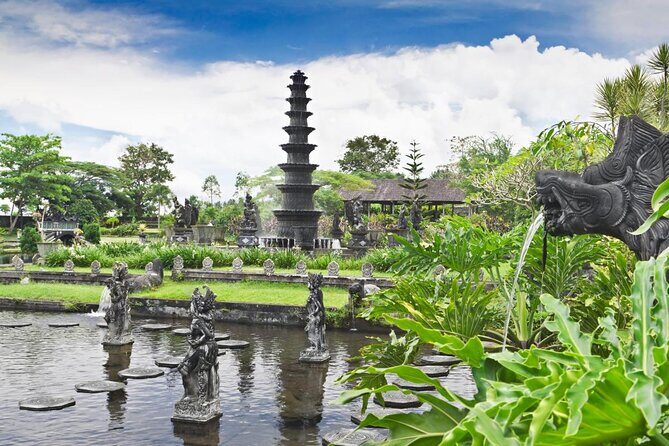
This tour works because it’s not trying to cram only famous sights into a checklist. It’s built around the Hindu rhythms you’ll actually notice when you travel through Bali: ritual spaces, daily offerings, and the way stories connect to places. The route is also designed for a full day without you having to bounce between transport lines or figure out what’s worth your time.
You start with a cultural performance and then shift into temples and sacred sites. That matters, because Bali’s Hindu culture isn’t just architecture. It’s also music, dance, symbolism, and the everyday habits you’ll see in villages and temple areas. The day includes a local village look, plus stops tied to tradition and historic power—like former-king water palaces (mentioned as part of the experience) and major temples.
If you’re someone who likes learning while you move—rather than only sitting in museums—you’ll likely enjoy the flow. And because it’s private, you’re not stuck waiting for a big group to finish photos or deal with language gaps. You get a driver-guide, and that helps the day feel more like a guided conversation than a bus tour.
If you're still narrowing it down, here are other tours in Seminyak we've reviewed.


Price and logistics: entrance tickets and timing
At $28 per person, this is priced like a value-focused private day. What you’re getting for that price is the heavy lift: door-to-door pickup and drop-off, A/C transport, an English-speaking guide who also drives, insurance, bottled water, a sarong provided for the visit, plus light snacks and refreshments.
What’s not included is the part that often adds up in Bali: entrance tickets. The tour notes admissions as not included for most stops, and lunch and the swing are optional. The good news is one big line item is marked as free at Bukit Jambul. Still, plan a little extra budget for temple and attraction tickets bought on the day.
Duration is listed as about 8 to 9 hours, which is a realistic full-day commitment from Seminyak. You’ll want to treat it like a day trip with steady driving, short stops, and some walking. The tour also says it requires good weather. That’s especially important for cave and waterfall time—rain can change access or comfort, and you may be offered another date or a refund if it’s canceled due to poor weather.
One more practical note: you’ll receive a mobile ticket, and the tour is private for your group. If you’re a couple, friends, or family, this is usually the sweet spot—privacy without you paying luxury rates.
Stop 1: Guwang Barong & Keris Dance and the meaning behind the gamelan
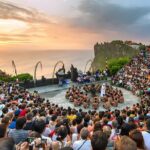
Starting with Guwang Barong & Keris Dance is a smart move, because it puts you into Bali’s storytelling before you walk into temples. The performance is introduced as a sacred dance escort with Balinese gamelan music, and it’s linked to a story of good and bad spirits connected to karma.
Even if you don’t speak Indonesian, a dance like this still lands because the music and staging are doing the “translation.” You’re not just watching motion—you’re seeing how belief and narrative get expressed through sound, movement, and symbolism. A private guide helps here, since they can point out what to pay attention to while you watch.
Plan for about 1 hour at this stop. The listing says the dance includes time for the performance, but admission isn’t included, so expect to pay locally for the ticket. Also, because it’s early in the day, it’s easier to stay energized if you’ve had breakfast and you’re wearing comfortable clothes for seating and movement.
A bonus: starting with something cultural like this tends to make the later temple visits feel less random. Instead of seeing buildings, you start thinking about the stories and values behind them.
Stop 2: Happy Swing Bali in Tegalalang and rice-terrace photo timing
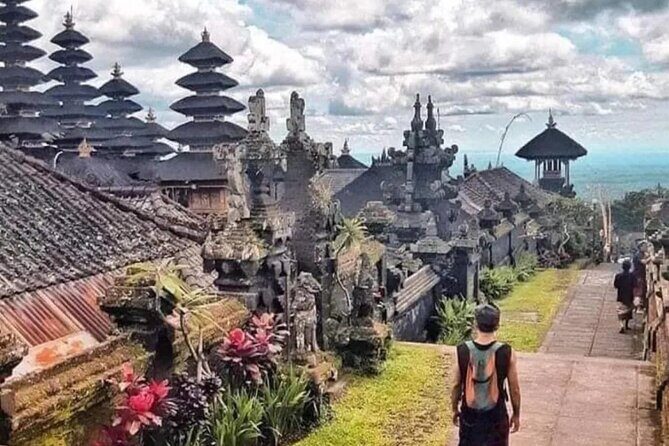
After the dance, the tour shifts into the Tegalalang area for Happy Swing Bali and rice-terrace views. The itinerary calls out a time of about 1 hour for this stop, including the chance to enjoy the best photo spots.
This is also where you should read the fine print mindset: the swing experience is optional, and the listing says entrance isn’t included. If you’re the type who loves photos, you can treat it as your “fun stop.” If you’re more focused on culture than staged viewpoints, you can still enjoy the rice terrace scenery without committing to the swing ride.
A practical tip: these photo areas can be hit-or-miss depending on weather and light. Since the tour requires good weather overall, you’re more likely to get good visibility. Still, bring patience for quick photo setups—private doesn’t mean instant. Your guide can help you choose spots based on timing during your visit.
Because this stop connects to the local village setting around Tegalalang, it can feel more grounded than a generic viewpoint. The rice terraces are part of how people live with the land, and your guide can help explain what you’re seeing while you take photos.
Stop 3: Tukad Cepung Waterfall—cave walking and when photos work
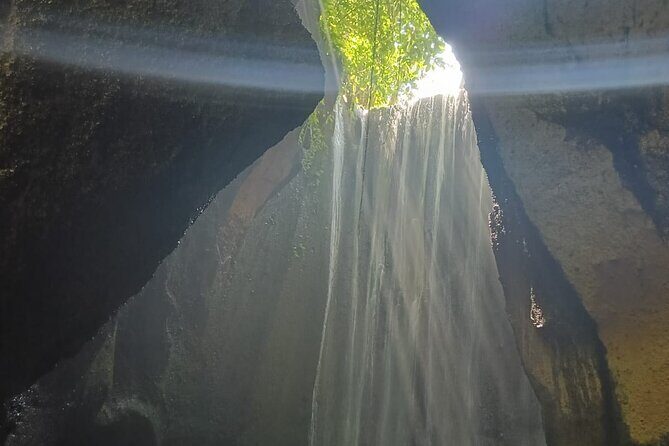
Tukad Cepung Waterfall is the kind of place that makes you slow down. You’re walking into a cave route through a natural tropical jungle setting, then reaching the waterfall view from inside the cave. The itinerary lists about 1 hour here.
What makes this stop special is the combination of movement and light. Because it’s a cave, your best views and photos depend on timing and how the light hits as you arrive. The waterfall is also a real walking experience, not a simple platform stop. If you’re comfortable walking on uneven cave paths and you don’t mind humidity, you’ll likely love it.
This stop also notes admission isn’t included, so you should expect a local ticket purchase. Another consideration: since it’s a cave walk, good footwear matters. You don’t want to slip, and you’ll appreciate shoes that handle damp surfaces.
Your guide’s role matters here. They can help manage the flow—when to enter, where to stand, and how to keep the visit moving without rushing you through the best moment.



Stop 4: Lereng Agung restaurant lunch and Balinese coffee sampling
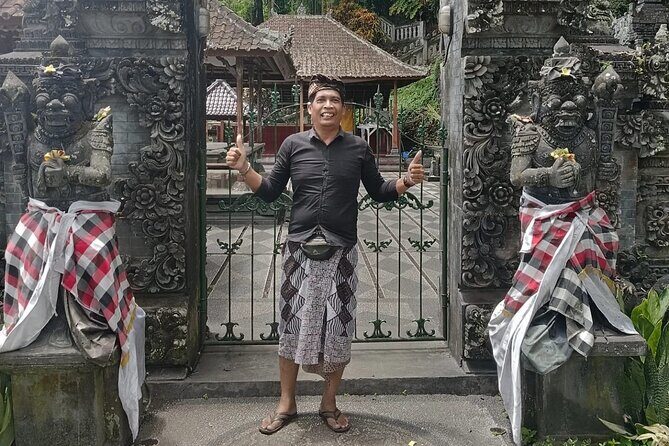
Lunch is handled at Ristorante Lereng Agung with views of Agung Volcano and terrace seating mentioned as part of the experience. The itinerary lists about 1 hour for the meal stop, and it notes that Indonesian and Western options are available, including vegetarian meals.
This is one of those practical stops that makes the whole day better. You’re not guessing where to eat between temples and cave walks. Since lunch can be a wildcard when you’re touring, having a planned restaurant reduces stress.
The overview also includes a local plantation to sample Balinese coffee. Even though the detailed itinerary stop list doesn’t specify where that tasting happens, it’s part of the experience. If you’re a coffee person, it’s worth paying attention to this portion—Balinese coffee tasting is often a fun way to slow down after more active stops and learn about local products in a casual setting.
Optional note: the listing says swing is optional and lunch isn’t necessarily included as part of the base package. So budget for lunch and any add-ons if they’re not covered in your booking price.
Stop 5: Besakih mother temple, plus Goa Lawah and water palaces
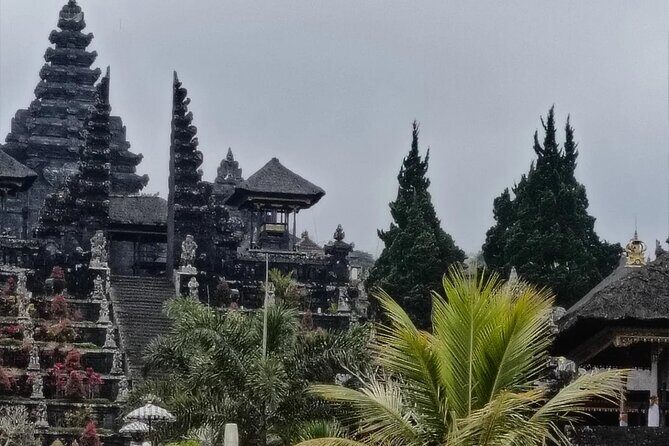
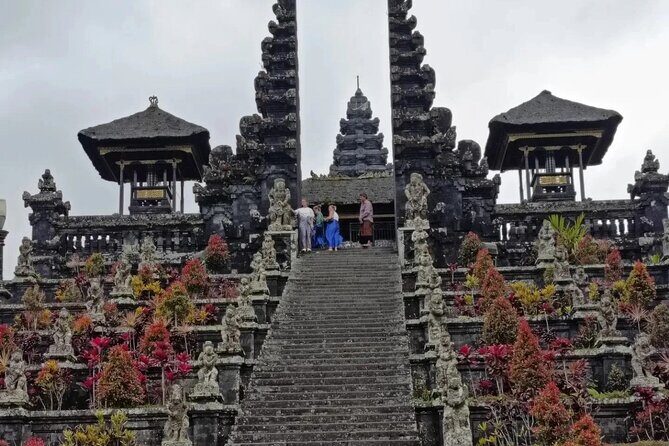
The centerpiece temple stop is Besakih Temple, described as Bali’s sacred mother temple located at the foot of Mount Agung. The itinerary lists about 1 hour for this visit, and it specifically mentions fresher daytime weather being suitable for walking.
Besakih is the kind of temple that can feel big in both scale and meaning. The “mother temple” label isn’t just marketing—it’s meant to signal importance within Bali’s Hindu world. With a guide, you’ll get more out of it than simply observing statues and stonework. You can connect what you saw earlier—dance stories and karma themes—to what you’re looking at now in the temple space.
This tour also mentions Goa Lawah Temple and two water palaces used by former kings as part of the overall experience. Even if you focus on Besakih as your anchor, these added sites help round out the day with variety: sacred cave temple energy, plus the former-power angle connected to water temples.
Don’t ignore the practical side of temple visits. You’ll likely spend time walking within temple areas, and you’ll appreciate the sarong provided if you need it for entry or comfort. Bring respect for the space and go at a calm pace—temple visits are where the day’s learning really takes root.
Stop 6 and 7: Bukit Jambul views toward Nusa Penida, then Kertha Gosa Park history
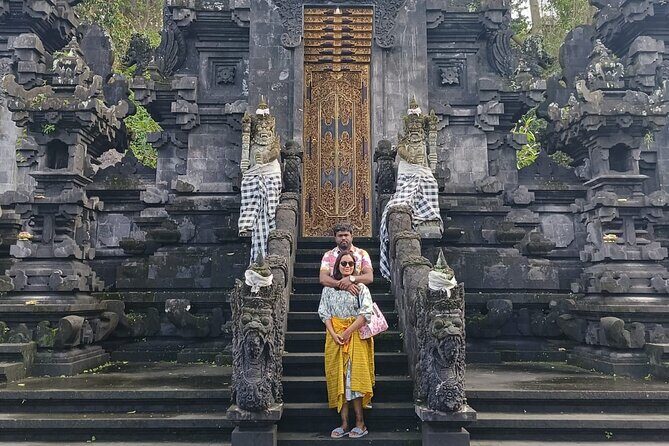
After Besakih, the day gets more view-heavy and then more historic.
Bukit Jambul viewpoint
Bukit Jambul is listed as 30 minutes, and it notes admission is free. You’ll go to the top hills view where you can see across the water, with Nusa Penida and Lombok mentioned as visible from the point.
This stop is short, which I like. You get the big horizon without losing the day to a long scenic detour. It’s the perfect place to swap out temple focus for pure geography. If you’re trying to understand where East Bali sits in relation to the surrounding islands, this is a helpful mental map moment.
Kertha Gosa Park in Klungkung
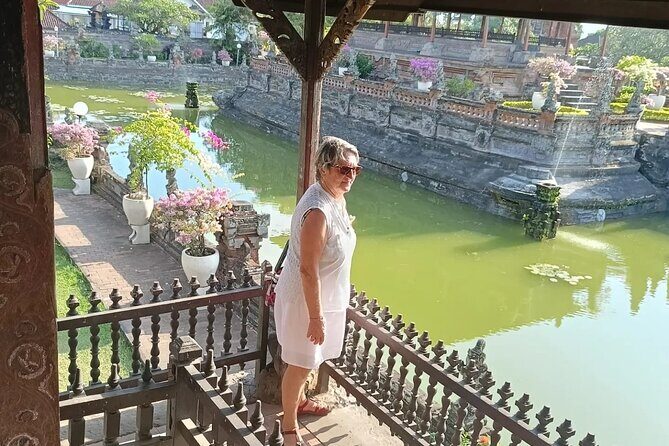
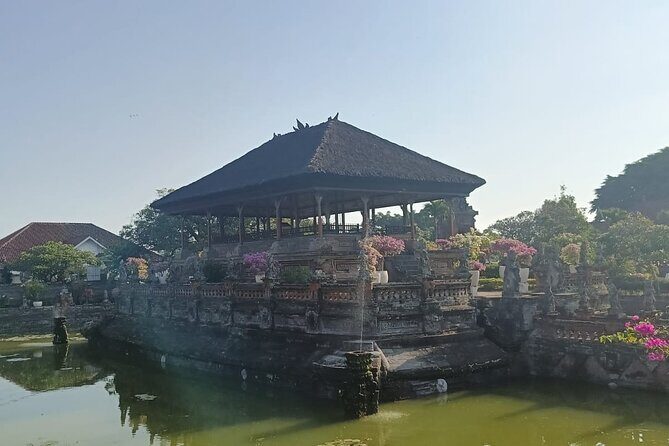
Then you finish at Kertha Gosa Park, also in the itinerary for about 1 hour. It’s described as the most historic place in Klungkung, connected to victories during a colonial era, with ancient objects stored in a museum next to the Kerta Gosa building.
This stop adds a different kind of context. After temples and traditions, you get history and education through the museum setting. If you care about Bali and Indonesia not just as scenery but as a living story shaped by different eras, Kertha Gosa gives you that extra layer.
Expect a smooth wrap-up after this, with the tour ending back at your hotel so you don’t have to handle the return journey yourself.
Who this tour suits best (and who should skip it)
This is ideal if you want Bali Hindu culture with a guide who can explain what you’re seeing in plain language, not just read plaques. It also suits you if you like a mix of active stops (like Tukad Cepung cave walking) and calmer ones (like Besakih and Kertha Gosa).
It’s especially good for small groups who value privacy. The tour is private for your group, and the guide doubles as driver, which usually makes timing easier. You also get helpful extras like sarong, water, snacks, and insurance for a more worry-free day.
You might want to choose something else if you hate paying separate entrance tickets. Since most admissions aren’t included, you’ll have several small payments along the way. And if you’re not comfortable walking in caves or around temple areas, you may find the physical parts less enjoyable.
On the guide side, one name you may hear is Made Karyana, who received strong praise for being polite, well-mannered, and for going above and beyond to make the day memorable. Another name connected to the service response is Ketut Pujayana, which suggests the operator takes guide performance and guest gratitude seriously.
Should you book this Fantastic East Of Bali Private Guided Tour?
I’d book it if your priority is a guided East Bali day that connects culture, temples, and history—while keeping transport and timing handled. For the price, the included transportation, pickup/drop-off, guide, insurance, and small perks like sarong and water make it feel like a solid deal, especially compared with the cost of hiring everything separately.
I wouldn’t book it only if you’re determined to keep entrance fees to near zero or if you’re hoping for a fully “no walking” experience. The cave and temple parts mean you need some comfort with movement, and you should budget for tickets.
If you’re going in weather that’s cooperative and you’re open to both learning and photos, this private itinerary is a good fit.
FAQ
How long is the Fantastic East Of Bali Private Guided Tour?
The tour runs about 8 to 9 hours.
Is pickup and drop-off included?
Yes. Door-to-door pickup and drop-off is included.
Are entrance tickets included in the price?
Entrance tickets are not included for most stops, and you buy them locally on your travel date. Bukit Jambul is listed as free.
Is lunch included?
Lunch is not included, and it’s described as optional.
Does the tour include a swing experience?
The swing is optional. The listing notes that lunch and swing are optional.
What happens if weather is bad?
The experience requires good weather. If it’s canceled due to poor weather, you’ll be offered a different date or a full refund.
Can I get a full refund if I cancel?
Yes for full cancellation: you can cancel up to 24 hours in advance of the experience for a full refund.