REVIEW · SEMINYAK
Ubud Cultural and Historical Guided Tour with Transfer
Book on Viator →Operated by Bali Tourist Information · Bookable on Viator
Bali in one long day is a win. This Ubud cultural tour strings together several of the island’s most meaningful sites, with a guide who helps you connect what you see to why it matters. I like that the route includes both everyday village life (a traditional house setting) and major spiritual stops, so your day feels more complete than a simple temple checklist. One thing to plan for: a handful of entrance fees are not included, so you’ll want some cash ready.
What I also really like is the practical comfort side. You get an air-conditioned vehicle, plus bottled water, which makes a 10-hour day much easier. The guide element seems to be a highlight too. I’ve seen examples of guides like Kadek being patient with timing, even waiting longer when someone’s schedule slipped, and Nanda getting praised for making the day feel worth every minute.
The possible drawback is simple: it’s a packed schedule, and there’s no meal included. If you’re the type who wants extra downtime, this may feel fast, especially after the water-temple stop where you may be on your feet for a while.
In This Review
- Key things you’ll notice on this tour
- Why this Ubud heritage route works so well on a long day
- Pickup from Seminyak, AC comfort, and how to use the schedule
- Stop 1: Batuan Traditional House Compound in Sukawati (Batuan Village)
- Stop 2: Puseh Batuan Temple and the Khayangan Tiga idea
- Stop 3: Elephant Cave (Goa Gajah) and the Lua Gajah connection
- Stop 4: Gunung Kawi King Memorial at Pakrisan River (Mount Kawi)
- Stop 5: Tirta Empul Spring Water Temple and cleansing rituals
- Stop 6: Gunung Kawi Sebatu Temple for Vishnu worship
- Price and real value: what $45.91 covers, and what you add on
- Guide timing, group pacing, and how to get the best day
- Who should book this Ubud Cultural and Historical Guided Tour
- Should you book this tour? My take
- FAQ
- What time does the tour start?
- How long is the tour?
- Is pickup included, and where is the tour starting from?
- Is an air-conditioned vehicle included?
- Do I need to pay entrance fees during the tour?
- What entrance fees should I expect to pay?
- Is there an English-speaking guide?
- Is bottled water provided?
- Is a meal included?
- Is this tour private?
- Cancellation (quick note)
Key things you’ll notice on this tour
- A structured heritage circuit covering traditional homes, cave temples, and two Gunung Kawi sites
- AC transfer plus water so you’re not baking between stops
- Temple entrance fees add up (several sites require separate tickets)
- English-speaking guide support that helps you understand what you’re seeing
- Time blocks that keep the day moving (about 10 hours total, starting 8:30 am)
Why this Ubud heritage route works so well on a long day
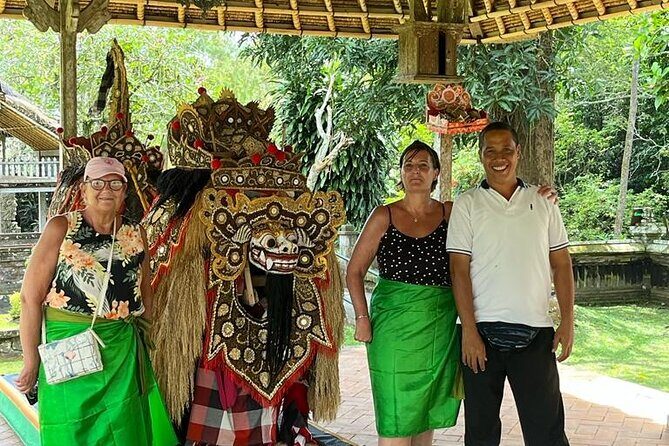
This tour is built like a “best-of” route, but it doesn’t feel random. You start with Batuan and then move through a sequence of sites tied to village life, worship, royal-era monuments, and ritual water. That order matters because each stop gives you a new lens.
For you, the payoff is clarity. Instead of bouncing around Bali trying to figure things out on your own, you follow a guide-led thread: household tradition, then temple worship, then major carved sites, then bathing and cleansing rituals, then a second temple that still brings you back to Vishnu-focused worship.
The 10-hour shape also makes it useful if you’re short on days. If you’re basing yourself around Seminyak, you get a single scheduled day to cover multiple highlights without having to coordinate your own car and separate tickets.
If you're still narrowing it down, here are other tours in Seminyak we've reviewed.


Pickup from Seminyak, AC comfort, and how to use the schedule
The day begins at 8:30 am, with pickup offered and an English-speaking driver tour guide. You’ll be traveling by an air-conditioned vehicle, with parking fees covered and bottled water included. In Bali heat, that’s not a small detail. It affects energy. It affects how much you can actually enjoy each site instead of just getting through it.
This is also listed as a private tour/activity where only your group participates. That can be a big deal in practice. Even if you’re traveling as a pair or solo, you’re not stuck in the kind of awkward pacing where everyone disappears and comes back later.
Your timing tip: keep your “arrival buffer” for early morning modest but real. One reason guides like Kadek get praised is patience with timing mix-ups. Still, the smoother you are leaving your pickup point, the less you’ll feel rushed between stops.
Stop 1: Batuan Traditional House Compound in Sukawati (Batuan Village)
Batuan is where the day’s story starts to feel human. You’ll visit a traditional house setting in Batuan Village, in the Sukawati District area of Gianyar Regency. It’s described as the home owned by the Gung Aji family, and foreigners often refer to it as the Bali Traditional House Gung Aji.
This stop runs about 1 hour, and the admission is free on the tour. That makes it an easy win at the start: you can use this time to get oriented before the more intense sacred sites later in the day.
What’s special here is the “ordinary life” angle. Temples and carved monuments often dominate first-timer photos, but a traditional household compound helps you understand the background of where culture lives. Even if you only catch a few details, it gives you a foundation for everything else you’ll see.
Possible drawback: because it’s one hour, you’ll want to stay mentally present. If you treat this like a quick photo stop, you’ll miss what makes it useful.
Stop 2: Puseh Batuan Temple and the Khayangan Tiga idea
Next up is Puseh Batuan Temple, a local village temple and part of the Khayangan Tiga system, described as three major temples in a village. This one is dedicated to Wisnu (the god of protector), and the time here is about 1 hour 30 minutes.
Admission is not included for Puseh Batuan Temple, and the listed fee is IDR 30,000 per person. Plan to pay this on site as part of your day budget.
Why this stop matters: the Khayangan Tiga framework helps you interpret what you’re seeing. Instead of thinking of temples as isolated “attractions,” you can think of them as connected pieces of village spiritual life.
What to do while you’re there: slow down for a few minutes and look for how the space feels designed for worship, not sightseeing. A good guide will point out the temple’s role in that larger village system, which is exactly what you want to carry into the later sites.
Stop 3: Elephant Cave (Goa Gajah) and the Lua Gajah connection

After Puseh Batuan, you’ll head to Elephant Cave (Goa Gajah). This is one of those places where the setting does half the work. The cave was built in the 11th century by the king of Udayana, and the name is said to come from Lua Gajah, a small river nearby.
You’ll spend about 2 hours here. Admission is not included, with a listed fee of IDR 50,000 per person.
Two details worth remembering so the stop feels more than just “a cave with stairs”:
- The cave complex includes a bathing area in front of the built place, with six figures mentioned inside.
- The cave’s name ties it to the landscape (Lua Gajah), which helps you see the site as connected to water and daily surroundings.
Potential consideration: 2 hours can be tiring if you’re expecting just quick wandering. Comfortable shoes matter, because caves and temple areas can involve uneven steps.




Stop 4: Gunung Kawi King Memorial at Pakrisan River (Mount Kawi)
Then comes Gunung Kawi (Mount Kawi), a carved temple complex linked to the 11th century reign period described as Anak Wungsu, the son of Udayana King. This complex is made up of 10 memorial rock-cut temples, and the description notes features carved into the rock face (it starts listing two gro… details, but the rest isn’t specified).
Your time here is about 1 hour 30 minutes. Again, admission is not included, with a listed fee of IDR 50,000 per person for the Gunung Kawi, Pakrisan River area.
What you’re likely to appreciate most: the scale and the effort behind the rock cuts. Even if you don’t know the full story, the monument style communicates authority and memorial purpose.
What can slow you down: the physical layout. If you rush, you lose the “why were they carved like this” feeling. A guide helps you understand what you’re looking at without turning it into a lecture.
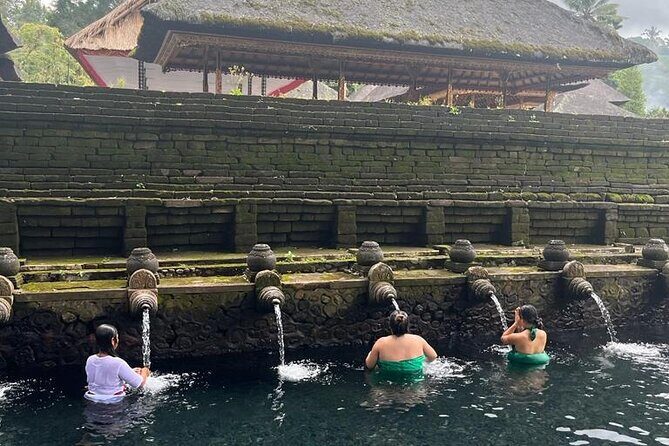
Stop 5: Tirta Empul Spring Water Temple and cleansing rituals
Now you reach Tirta Empul (Spring Water Temple) in the Tampaksiring region, near Gunung Kawi. This stop is about 2 hours.
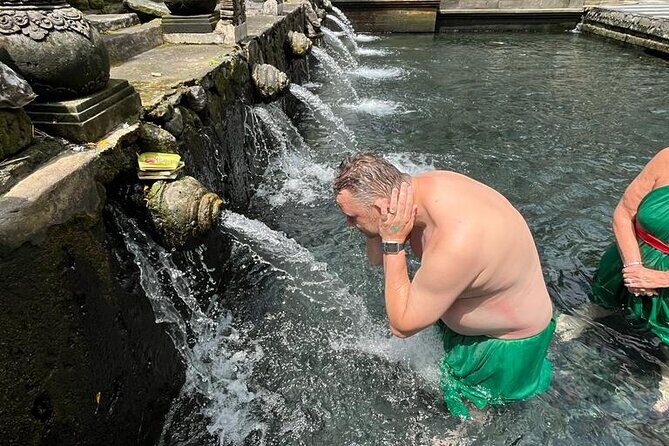
The key idea is right there in the name and description: it’s located around springs with special bathing pools, and the overview also points to cleansing rituals. So instead of treating this like a standard temple photo stop, treat it like a functioning spiritual space where water is central.
Admission is not included, with a listed fee of IDR 50,000 per person. The stop’s access points and routines are best navigated with your guide’s help, especially when people are following specific directions in a water-temple setting.
Why this stop is a highlight for many people: it’s sensory. Water changes the entire mood. The sound, the coolness, and the focus on purification stand in contrast to the carved, stone-heavy monuments you’ve already seen.
Consideration: since you’re spending two hours here, you should stay flexible if the area is busy. Your guide can help you keep moving at a respectful pace.
Stop 6: Gunung Kawi Sebatu Temple for Vishnu worship
The final temple stop is Gunung Kawi Sebatu Temple. The exact construction date isn’t stated, but historical records in the description say it was built for worship of the gods, especially Lord Vishnu, on orders from a ruler mentioned only partly in the text provided.
Time here is about 2 hours, and admission is not included, with a listed fee of IDR 30,000 per person.
This is a good closer because it brings you back to worship themes after Tirta Empul’s cleansing focus. Even with limited time, you can connect the dots: water and sanctity earlier, then temple worship and divine dedication here.
Practical tip for this ending segment: keep your phone charged. By this point in the day, your energy may dip, and having photos plus the guide’s explanations can help you remember what made each site different.
Price and real value: what $45.91 covers, and what you add on
The listed price is $45.91 per person, for roughly 10 hours. What you’re getting that’s easy to value:
- Air-conditioned vehicle
- English-speaking driver tour guide
- Parking fees
- Bottled water
- Mobile ticket
- Pickup offered, plus group discounts (exact details aren’t specified)
The part you must budget separately is entrance fees. Based on the listed amounts, you’ll likely pay:
- Tirta Empul Temple: IDR 50,000
- Gunung Kawi Sebatu Temple: IDR 30,000
- Puseh Batuan Temple: IDR 30,000
- Elephant Cave: IDR 50,000
- Mount Kawi, Pakrisan River: IDR 50,000
That total comes to IDR 210,000 per person in entrance fees, with Batuan Traditional House listed as free. Meals are also not included.
So is it good value? For a full day that covers multiple sites with transport and guide support, it can be. The biggest value driver is that you’re not coordinating rides and ticketing while trying to understand what each site represents.
If you already planned to hire a driver anyway and you’re paying for guide time, this route can feel efficient. If you’d rather visit just one or two places slowly, the entrance add-ons and packed schedule may feel less attractive.
Guide timing, group pacing, and how to get the best day
The guide quality shows up in the way the day runs. Examples include Kadek being praised for patience and waiting when someone misjudculated early timing. That suggests the team is used to real-life delays, not just perfect schedule theory.
Nanda is also mentioned in a positive way, with praise for making the experience feel like more than the price. That’s exactly what you want from a guide on a 10-hour day: they make each stop feel understandable, not like you’re just being dropped at gates.
Your own “make it better” checklist:
- Start fresh at 8:30 am. Don’t plan a big breakfast that slows you down.
- Expect the day to feel full. If you need slow moments, talk to the guide early so they can manage pacing.
- Bring water if you like extra. You’ll have bottled water, but you might want more for the ride segments.
- Plan to eat on your own since meals aren’t included.
Who should book this Ubud Cultural and Historical Guided Tour
This tour fits best if you:
- Want a structured day covering several major cultural sites in the Ubud/Tampaksiring area
- Appreciate learning what you’re seeing, not just getting photos
- Prefer having transport and tickets coordinated under one plan
- Are okay with temple entrance fees on top of the tour price
It may be less ideal if you:
- Want meal and downtime built into the schedule
- Prefer fewer stops and longer independent exploration
- Get overwhelmed by a full day with multiple transitions
Should you book this tour? My take
If your goal is a first visit to the Ubud-side heritage highlights, this is a solid choice. You get a logical sequence across Batuan, Goa Gajah, Gunung Kawi, Tirta Empul, and Gunung Kawi Sebatu, with an English-speaking guide, AC transfer, and bottled water. The main trade-off is cost at the gates plus a day that stays busy.
My suggestion: book it if you value guidance and efficiency. Skip it if you’re traveling for slow mornings, long lunches, and a lighter schedule. Either way, plan your entrance-fee budget and you’ll avoid the last-minute cash scramble.
FAQ
What time does the tour start?
The start time is 8:30 am.
How long is the tour?
The duration is about 10 hours.
Is pickup included, and where is the tour starting from?
Pickup is offered, and the location is Seminyak, Indonesia.
Is an air-conditioned vehicle included?
Yes. An air-conditioned vehicle is included.
Do I need to pay entrance fees during the tour?
Yes. Entrance fees are not included for several stops, including Tirta Empul, Gunung Kawi, Puseh Batuan, Elephant Cave, and Gunung Kawi Sebatu. Batuan Traditional House is listed as free.
What entrance fees should I expect to pay?
The listed entrance fees are IDR 50,000 (Tirta Empul), IDR 30,000 (Gunung Kawi Sebatu), IDR 30,000 (Puseh Batuan), IDR 50,000 (Elephant Cave), and IDR 50,000 (Mount Kawi, Pakrisan River).
Is there an English-speaking guide?
Yes. An English-speaking driver tour guide is included.
Is bottled water provided?
Yes. Bottled water is included.
Is a meal included?
No. Meal is not included.
Is this tour private?
It’s listed as private, meaning only your group will participate.
Cancellation (quick note)
Free cancellation is available up to 24 hours in advance for a full refund.