REVIEW · SEMINYAK
Uluwatu Temple & Kecak Fire Dance Show (Include All Tickets)
Book on Viator →Operated by Bali Majesty Tour · Bookable on Viator
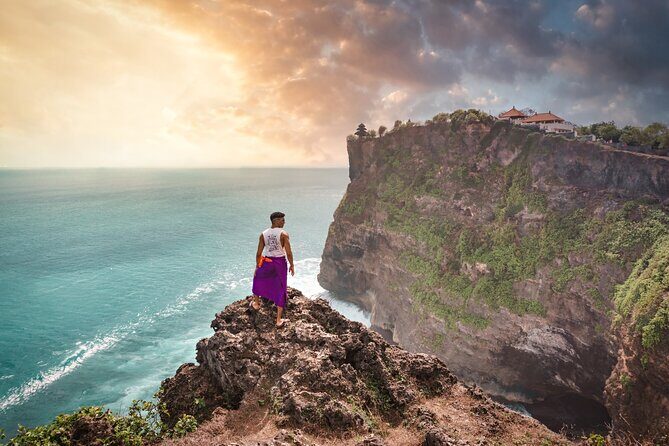
Cliff views make Uluwatu unforgettable. This is one of Bali’s classic sundown setups: a 13th-century temple perched roughly 100 meters above the Indian Ocean, plus a famous evening performance where the Kecak trance chant builds over the sound of the waves. I also like the mix of easy “wow” scenery with real cultural storytelling from the Ramayana.
I really love two parts: the sunset moment at Uluwatu Temple and the way the Kecak performers lock into a rhythmic trance before the fire dance portion. The potential drawback is simple: this is a popular sunset stop, so expect crowds and a lot of steps once you arrive.
A smooth guide makes a difference. I like that Bali Majesty Tour pairs hotel pickup with an experienced English-speaking driver/guide—some guides they’ve had in the past, like Putu, have helped people get oriented quickly in a packed temple area. And you’re not left scrambling for basics: a free sarong is included for entering the temple.
Key things to know before you go
- Uluwatu Temple is a cliffside 13th-century site, built by Priest Mpu Kuturan, with sea-god traditions.
- Long-tailed monkeys live on-site, so keep your stuff zipped up and close.
- The Kecak show runs about an hour, starting once the sunset colors are mostly set.
- Fire dance is part of the same performance, following the Ramayana scene.
- Pickup and tickets are included, so you can focus on timing rather than paperwork.
- You’ll negotiate steps in a busy temple area, especially at peak sundown.
In This Review
- Uluwatu’s Cliffside Sunset: A Temple Built for the Sea and the Sky
- The Monkey Neighborhood: Stunning Views With a Side of Mischief
- Entering the Temple: How the Sarong and Timing Help
- Kecak and Fire Dance: The Ramayana Story Through Chant and Rhythm
- Pickup, Car Comfort, and Why “Included” Tickets Change the Value
- Crowds, Steps, and How to Make Your Evening Feel Easier
- Best for Who? The Travelers Who Usually Love This Tour
- Weather, Dates, and the One Thing You Can’t Control
- Should You Book This Uluwatu Temple & Kecak Fire Dance Tour?
- FAQ
- What time does the tour start?
- How long does the experience take?
- What’s included in the ticket price?
- Do I need to bring a sarong?
- Is this tour private or shared?
- Do I need a minimum number of people to join?
- What happens if the weather is bad?
- Do they provide hotel pickup?
Uluwatu’s Cliffside Sunset: A Temple Built for the Sea and the Sky

Uluwatu Temple is famous for one reason that you can’t fake: you’re watching the ocean from a steep cliff. The temple dates to the 13th century and was built by Priest Mpu Kuturan, as part of a line of temples created to protect the island from evil spirits. In Uluwatu’s case, that protective role is strongly tied to sea gods, which fits perfectly with the way the coastline frames the views.
You’ll feel how much the location matters once you’re there. The ocean looks different at sunset—darker, closer, and somehow more dramatic because the waves keep moving while everything else slows down. It’s the kind of sight where you stop thinking about the schedule and start thinking about the angle of light.
Plan for the fact that this is the “best time” for a lot of people at once. Uluwatu draws sunset crowds, and the temple area is compact. If you’re hoping for quiet photos, you’ll be disappointed. If you’re happy to blend into the energy and enjoy the show, you’ll be fine.
The Monkey Neighborhood: Stunning Views With a Side of Mischief
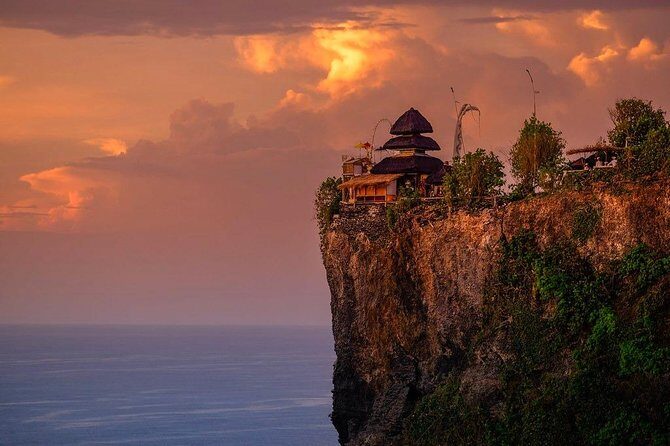
Uluwatu isn’t just temple architecture and ocean views. It’s also a living forest area where long-tailed monkeys roam close to visitors. The monkeys can be friendly in short bursts, but they can also be curious in ways that get annoying fast—especially if your bag is open or you’re holding food.
The practical move: treat every pocket and every zipper like it’s important. Keep your phone secured, stow loose items, and don’t walk around with snacks in your hand. If a monkey approaches, don’t panic—just back away slowly and protect your belongings.
Also, remember this is a temple and it’s outdoors. So you’ll be navigating uneven ground and stairs on the way in and out. The good news is the walking is normal for most people. The caution is that if you’re sensitive to steps or crowded conditions, sundown timing can make it feel slower than expected.
If you're still narrowing it down, here are other tours in Seminyak we've reviewed.



Entering the Temple: How the Sarong and Timing Help
What I like about this tour is that the basics are handled for you. You get free sarong use to enter the temple, so you don’t have to buy or track one down last minute. It’s one of those small details that saves time and stress—especially when you’re traveling with a group and everyone has slightly different plans for what to wear.
Your visit starts in the late afternoon (start time 3:00 pm) and runs about 5 hours total. That timing matters because Uluwatu is best when the sky turns. You’ll arrive when there’s still enough daylight to orient yourself, but the sunset is close enough that the whole place starts to feel like it’s “switching on” for the evening show.
The temple visit portion is about 1 hour of admission time included. That’s usually just enough for the main viewpoints and to see the grounds without feeling rushed to the point of frustration.
Kecak and Fire Dance: The Ramayana Story Through Chant and Rhythm
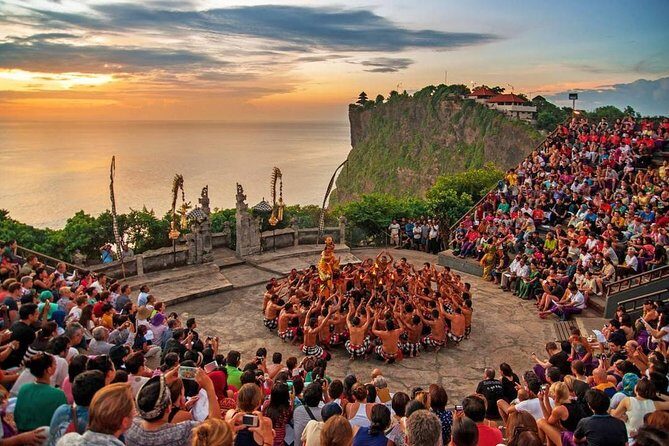
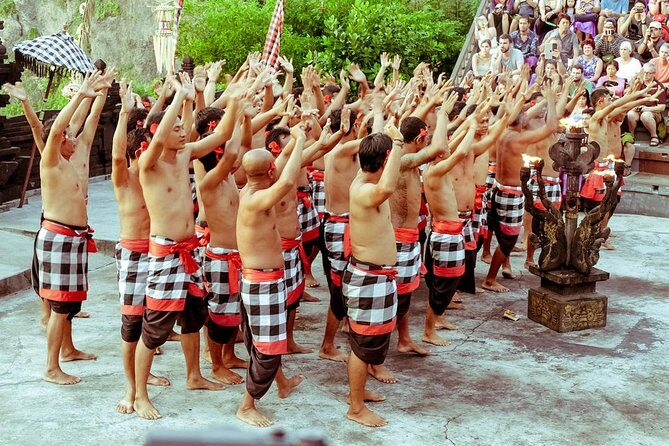
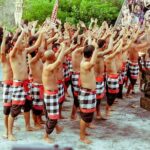
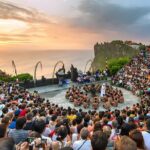
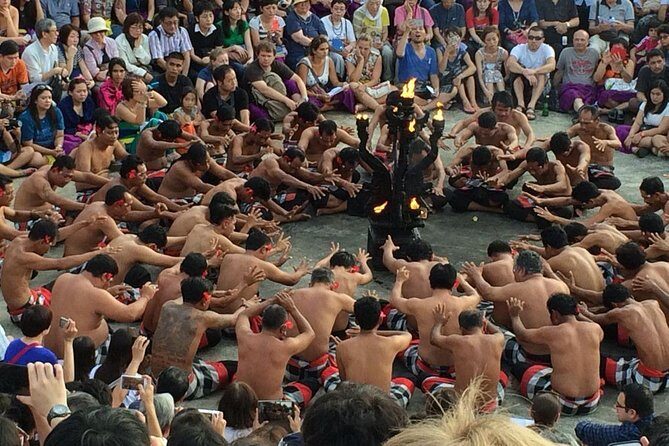
After the temple, you shift from ocean views to performance energy. The Kecak and Fire Dance show is one of Bali’s most recognizable cultural experiences, and it works because it doesn’t rely only on visuals. The sound drives the emotion.
Kecak has deep roots tied to sacred ritual music. The tradition is connected to Sanghyang—where different sound elements shaped chanting and accompaniment—and over time it developed into a performing art. For this performance style, there’s an agreed understanding that it was developed into stage performance by artists from Bona, Gianyar, and that early shaping for stage presentation happened in the early 1930s. The show uses the Ramayana story as the dramatic framework, and the performers use a trance chant that builds in intensity.
Then comes the fire dance component. Even if you don’t know the full storyline, you’ll feel the shift: the chanting gives structure, and the fire portion adds pulse, risk, and spectacle. It’s not random dancing—it’s presented as part of the show’s dramatic arc.
One thing I appreciate is that this performance is tied to temple context. The tour information notes that Kecak can be staged in temple settings, and that matters. You’re not watching it in a generic venue with identical acoustics and distractions. The setting helps the performance feel like a cultural event rather than just entertainment.
The Kecak portion is also about 1 hour, included in your ticket. That makes planning simpler: you know roughly how long you’ll be seated and watching, instead of it stretching into a whole night.
Pickup, Car Comfort, and Why “Included” Tickets Change the Value
This tour includes hotel pickup and drop-off by a private fully air-conditioned car, plus an experienced English-speaking driver/guide, petrol and parking fees, and bottled mineral water. It also includes admission tickets for both the temple entrance and watching the Kecak dance.
That “included” package is the real value. In Bali, the hidden costs of a day like this can stack up fast—transport to Uluwatu, entrance fees, and time spent figuring out the right ticket line or where to stand. Paying one bundled price helps you avoid the annoying parts and focus on the timing that makes the experience work.
At $49 per person, it can be a fair deal because you’re paying for both transport and entry. It’s not a luxury spa price, and it’s not a bare-bones ride to a location where you fend for yourself. You’re buying a managed sunset plan.
One practical note: the tour is listed as private (your group only), but it also mentions a minimum of 2 participants. So if you’re traveling solo, you’ll want to check how they handle that setup before booking.
Another small bonus: it uses a mobile ticket, so you’re not carrying paper around during the day.
Crowds, Steps, and How to Make Your Evening Feel Easier
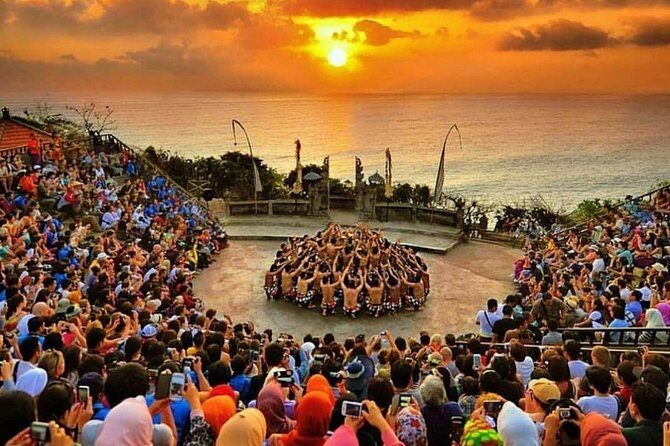
Uluwatu is popular, and the timing you’re using is peak. That means you’ll likely deal with crowds around the temple viewpoints and the approach areas. This is exactly where a good guide earns their keep.
In past experiences with Bali Majesty Tour, guides like Putu have helped people get through a crowded temple efficiently—getting you oriented and helping you figure out where to go so you don’t waste your one hour of temple time. Even if crowds don’t disappear, smart navigation keeps the experience from feeling chaotic.
Here’s how you can keep your own experience smooth:
- Wear slip-resistant footwear. The ground can be uneven and the steps add up.
- Bring a small bag you can keep in your front or close to your body around monkeys.
- If you want the best temple photos, aim to arrive ready to shoot quickly during the window you have.
Crowds also affect the vibe of the show. Kecak is a performance where the chant and group coordination matter. If you spend too much time wandering, you can miss the best build-up.




Best for Who? The Travelers Who Usually Love This Tour

This Uluwatu + Kecak combo suits a specific travel style: you want a top sunset location, you enjoy seeing how culture is performed in a meaningful setting, and you don’t want to waste time juggling transport and ticket logistics.
You’ll likely love it if:
- You’re in Bali for a short time and want a single evening that feels like a highlight.
- You care about cultural performances, not just scenery.
- You prefer an organized plan with pickup and included entry.
You should consider whether it’s right for you if:
- You dislike crowds and stairs. The temple and viewpoints involve negotiation and footwork.
- You’re anxious around monkeys. They’re part of the experience, and you’ll need to keep your belongings secure.
The good part is that most travelers can participate. So this isn’t an extreme activity. It’s just a realistic temple evening with a crowd.
Weather, Dates, and the One Thing You Can’t Control
This tour needs good weather, which is common for outdoor temple and sunset viewing. If conditions aren’t right, the experience can be moved to a different date or refunded. That’s one of those “only Bali” realities: you plan your timing around sunsets, and sometimes the sky changes the script.
Because the show is outdoors and the temple is cliffside, the weather affects the experience more than it would in a fully indoor museum. When your date is confirmed, treat it as your best shot—then keep expectations flexible if the sky doesn’t cooperate.
Also, it’s smart to book ahead. The tour info notes it’s typically booked around 27 days in advance, which tells you this sunset slot doesn’t wait around.
Should You Book This Uluwatu Temple & Kecak Fire Dance Tour?
Yes, book this if you want a well-timed sunset temple visit plus a famous cultural performance, without the stress of transport and separate ticket logistics. The fact that pickup, sarong, water, and both admissions are included makes it easier to justify the price compared to piecing everything together on your own.
I’d skip it or choose carefully if you’re the type who hates crowds, struggles with stairs, or feels uneasy around monkeys. In that case, you may still love the views and the show, but the experience could feel less comfortable than you’d like.
If you do book, show up ready for a classic Bali evening: protect your belongings, wear good shoes, and trust the timing. Once the chant starts and the fire portion follows, you’ll understand why Uluwatu is on so many Bali lists year after year.
FAQ
What time does the tour start?
The tour starts at 3:00 pm.
How long does the experience take?
The total duration is about 5 hours (approx.).
What’s included in the ticket price?
Admission tickets are included for both Uluwatu Temple and watching the Kecak and Fire Dance. The tour also includes hotel pickup and drop-off, an experienced English-speaking driver/guide, petrol and parking fees, bottle mineral water, and free sarong use to enter the temple.
Do I need to bring a sarong?
No. Sarong use is included for free to enter the temple.
Is this tour private or shared?
It’s listed as a private tour/activity, so only your group participates.
Do I need a minimum number of people to join?
Yes. The tour requires a minimum of 2 participants.
What happens if the weather is bad?
This experience requires good weather. If it’s canceled due to poor weather, you’ll be offered a different date or a full refund.
Do they provide hotel pickup?
Yes. Hotel pickup and drop-off are included by a private fully air-conditioned car.
If you want, tell me your hotel area (Seminyak, Canggu, Ubud, etc.) and how many people are going, and I’ll help you sanity-check whether this timing fits your Bali plan.