REVIEW · KUTA
2 Hours Private Scooter Lesson in Bali
Book on Viator →Operated by Bali Freedom Way · Bookable on Viator
Learning to ride in Bali can feel scary. The lesson format here turns that into a skill you can use. It’s a private 2-hour scooter lesson in the Kuta area that starts with simple control basics and grows into real-street confidence—so you’re not guessing when you finally join traffic.
Two things I really like: the instructor-led progression (you practice in a safe space first, then move to quieter streets only after you’re ready) and the defensive riding focus that’s modeled on how experienced riders handle busy roads in Bali. In reviews, instructors like Iqbal and Chris get praised for being patient and calm, even if you’re starting from zero.
One possible drawback to consider: this is not a “sit and get a shortcut” course. If you’re hoping to learn scooter riding for free-roaming main-road speed right away, you might feel it’s slower than you want—also, a solo setup can make the price feel high compared to a standard rental.
In This Review
- Key highlights that matter
- Kuta pickup to the practice lot: how the 2-hour lesson flows
- Scooter basics and control theory (before you roll)
- The “learn it in pieces” practice: balance, braking, turns, and acceleration
- Defensive riding in Bali: the street rules you actually need
- Progressing to a real street: why the quiet village step is smart
- Price, value, and who this is best for at $31
- What the 2 hours really “covers” (so you know what you’re buying)
- Practical expectations: pickup, mobile ticket, and the weather factor
- Who should book this scooter lesson (and who might not)
- My booking checklist before you show up in Kuta
- Should you book this Bali private scooter lesson?
- FAQ
- How long is the Bali scooter lesson?
- What areas do you pick up from?
- Is this a private lesson?
- What do I learn during the lesson?
- Do I practice on quiet streets or main roads?
- Where is the meeting point?
- What is the price?
- Do I need a mobile ticket?
- What if the weather is bad?
Key highlights that matter
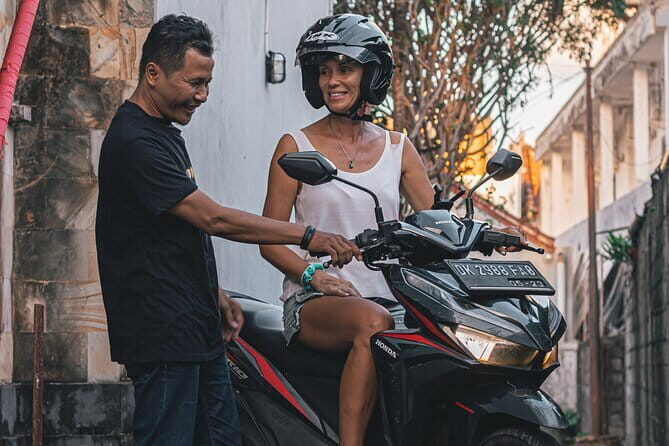
- Pickup in Kuta, Seminyak, Jimbaran, Uluwatu, Sanur, and Denpasar, so you don’t waste your lesson time finding the training spot
- Brief theory first, so you understand scooter controls before you start rolling
- Practice jumps from balance and braking to turning and acceleration, step by step
- Defensive riding guidance using a standard taught to gojek drivers, geared to Bali road habits
- Quiet village street practice only after you feel comfortable
- Highly rated, 4.9 with 97% recommendation, with repeated praise for patient instruction
Kuta pickup to the practice lot: how the 2-hour lesson flows
This is designed to be simple to fit into your Bali day. You start at Airport Scooter Lesson, Jl. Mataram, Kuta (Kec. Kuta, Kabupaten Badung, Bali 80361), and the activity returns you to the meeting point at the end.
If you’re staying around the main south-coast areas, you’ll likely get pickup from Kuta, Seminyak, Jimbaran, Uluwatu, Sanur, or Denpasar. That matters because your first scooter lesson is already stressful. Anything that reduces friction—like finding a place yourself—helps your brain learn faster.
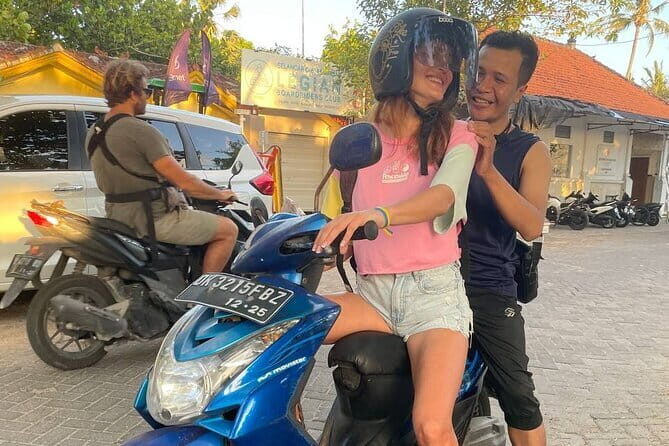
The training itself happens in a nearby open area, like a parking lot or empty field. That’s a smart choice for a first session. You’re learning how the scooter behaves (not how to dodge obstacles).
A key detail: this is a private session for your group only (the listing notes up to 1). That means you’re not competing for attention with other people and you can move at your pace—especially important when you’re balancing, braking, and turning for the first time.
If you're still narrowing it down, here are other tours in Kuta we've reviewed.



Scooter basics and control theory (before you roll)
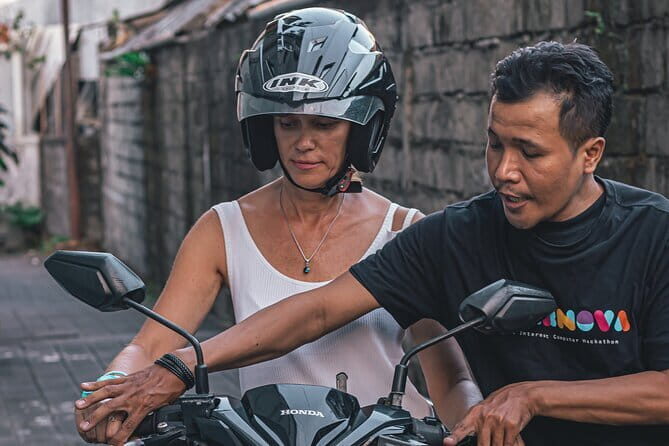
A short theory session kicks things off. You’ll learn how the scooter works and what each part does, rather than just being handed keys and hoping for the best.
Why this is valuable: when you understand the controls early, you stop wasting mental energy on the wrong things. Instead of panicking about what lever does what, you can focus on balance and smooth starts—two skills that prevent the most common beginner problems.
During this part, you should expect a straightforward run-through of the scooter’s mechanics and key functions. In the reviews, I’ve seen this called out as especially helpful, like the way the instructor explains how to start the engine. That kind of practical clarity is the difference between feeling stuck and feeling capable within minutes.
The “learn it in pieces” practice: balance, braking, turns, and acceleration
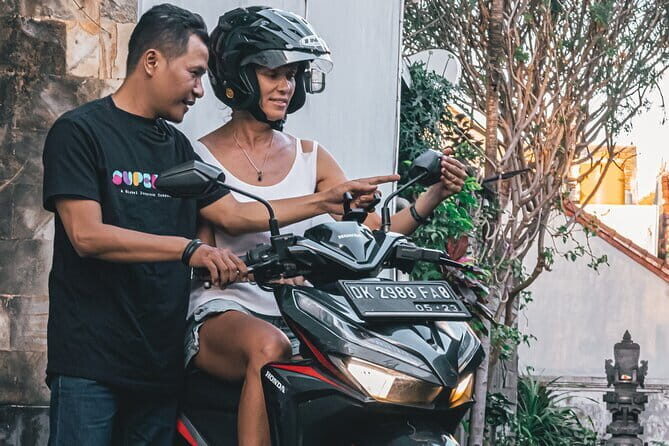
After the theory, the lesson moves into hands-on exercises. The structure is built around core riding skills:
- Acceleration (getting moving smoothly without jerking)
- Balance (staying steady at low speed)
- Turning (learning how turning feels before adding traffic complexity)
- Braking (slowing down safely and predictably)
This kind of progression is the whole point of a lesson. Learning to ride isn’t one skill. It’s several small skills that need repetition until they become automatic.
Here’s what you should watch for mentally: early on, beginners often try to “solve everything” at once—speed, balance, steering, and braking at the same time. The way this lesson is staged helps you do the opposite. You learn one piece, then connect the pieces.
The “quiet practice space” is doing real work for you here. You’re building muscle memory without the pressure of traffic noise, honking, and road decisions.
Defensive riding in Bali: the street rules you actually need

Once you’ve worked through the basics, the lesson shifts to riding knowledge for real roads. The course includes crucial safety tips for riding confidently on main roads.
A major emphasis is defensive riding, and the approach is described as following a standard used for teaching gojek drivers. In plain terms: you learn how to ride while assuming the unexpected could happen—so you’re less likely to freeze when something changes around you.
You’re also taught how to handle intersections and the practical rhythm of road behavior in Bali. Reviews specifically mention that instructors explain how to go through intersections, which tells me this isn’t just “ride around slowly.” It’s about building decision-making skills, not only scooter handling.
Another detail that matters: you’ll learn about the distinct riding culture in Bali, which differs from other places. That’s not a “cultural lecture.” It’s the mental model you need to understand why the roads feel the way they do—and how to stay calm and controlled anyway.
In reviews, instructors such as Iqbal and Chris are praised for patience and calm teaching style. That matters because defensive riding advice is easiest to absorb when you’re not panicking.
Progressing to a real street: why the quiet village step is smart

One line in the lesson description sums up the best safety strategy I’ve seen for beginners: you practice on a quiet village street only when you feel comfortable and confident.
This is a big deal. A lot of scooter lessons fail because they jump from empty space straight into complicated traffic. Here, you get an in-between step: real roads, but calmer conditions. It helps your brain translate what you learned about braking, turning, and balance into a street setting.
If you’ve been anxious just thinking about traffic, this staged progression is exactly what you want. It lowers the chance that the first “hard moment” ruins your confidence.
And it supports the defensive riding theme. Calm practice gives you the chance to apply safety habits without feeling like you’re fighting the whole road at once.






Price, value, and who this is best for at $31
The price is $31.00 per group (up to 1) for about 2 hours. On paper, that might sound like “only two hours—why pay?” But scooter learning isn’t just time. It’s risk reduction, confidence building, and faster skill development than trial-and-error.
If you’re planning to rent a scooter after your lesson, this can be a smart way to avoid the most expensive mistake: learning in traffic while you’re still unsure about starts, turns, and braking.
At the same time, one review notes it felt overpriced for a solo rider. That’s fair. If you compare this to a lower-cost rental only, you’ll see a difference. You’re paying for instruction quality, a safe practice plan, and someone helping you learn correctly instead of learning by mistakes.
So the value math depends on you:
- If you’re a complete beginner, you’ll likely feel the lesson is worth it fast.
- If you already rode scooters before, you might find you need less instruction than two hours provides.
- If you’re traveling alone, you’re not splitting the cost with anyone, so it can sting a bit.
What the 2 hours really “covers” (so you know what you’re buying)

It helps to think of the lesson as three layers:
1) Controls and confidence basics
You learn how the scooter works and practice acceleration, balance, turning, and braking. This is the foundation.
2) Safety habits for Bali road life
You get defensive riding tips meant for main roads and intersection situations, plus guidance on Bali’s riding culture.
3) A street practice moment that matches your level
You then test your skills in a quieter village street setting once you’re ready.
This package is built for people who want to start riding in Bali without feeling like they’re taking a blind leap.
If you’re expecting a long guided ride around scenic areas, don’t treat this as that. This is training-focused. The value is in skill transfer, not sightseeing stops.
Practical expectations: pickup, mobile ticket, and the weather factor
You’ll receive confirmation at booking, and the tour includes a mobile ticket. You also get the practical “start and finish at the same point” design, which reduces the stress of coordinating rides.
There’s one real-world limiter: this experience requires good weather. If conditions are poor and it gets canceled, you’ll be offered another date or a full refund. That’s important because scooters and slick roads are not a fun combo.
The lesson also notes a moderate physical fitness level. Translation: you’ll be expected to handle the basics of controlling a scooter, maintaining balance, and doing short practice drills. If that’s a concern, consider whether you can comfortably stand, step, and control the scooter at low speed for the duration.
Who should book this scooter lesson (and who might not)
This lesson is a great fit if you:
- are new to scooters and want someone to teach you step by step
- feel nervous about traffic and want a safer ramp-up
- plan to rent or ride afterward and want to start with a solid foundation
- prefer a private setup where instruction can match your pace
It may not be the best fit if you:
- already feel comfortable riding in traffic and just want a quick rental
- need a lesson that feels like a long ride tour (this is short and training-focused)
- expect immediate mastery of every road scenario in two hours
My booking checklist before you show up in Kuta
To get the most out of a 2-hour lesson, I’d show up with a simple mindset: ask for clarity, practice gently, and follow the progression.
Also, plan for the fact that your first attempts will likely feel awkward. That’s normal. If you can treat the early part like drills—not a test—your confidence tends to grow quickly.
Finally, since instructors in reviews are praised for patience (including Iqbal and Chris), lean into that. If something doesn’t click, say so during the session. A good teacher can adjust, but you have to communicate what you’re stuck on.
Should you book this Bali private scooter lesson?
If you’re riding scooters in Bali for the first time, I think booking is a smart move. This lesson is built around real beginner needs: theory for controls, repeat practice for balance and braking, defensive guidance for how Bali roads work, and a gradual jump to street practice when you’re ready.
The big question is whether you value instruction enough to pay for it—especially if you’re alone. If you’re the type who hates uncertainty and wants to reduce risk quickly, the value lands well. If you’re already confident on scooters, you may not get the same payoff.
FAQ
How long is the Bali scooter lesson?
It’s about 2 hours.
What areas do you pick up from?
Pickup is offered in Kuta, Seminyak, Jimbaran, Uluwatu, Sanur, and Denpasar.
Is this a private lesson?
Yes. It’s a private tour/activity, and only your group participates (up to 1 is listed for the group size).
What do I learn during the lesson?
You get a brief theory session about scooter mechanics, then practice acceleration, balance, turning, and braking. You also receive safety tips for main roads, defensive riding guidance, and advice on riding culture in Bali.
Do I practice on quiet streets or main roads?
You practice in an open area first (parking lot or empty field). After you feel comfortable, you move to a quiet village street for real street feel.
Where is the meeting point?
Start at Airport Scooter Lesson, Jl. Mataram, Kuta, Bali 80361, Indonesia. The activity ends back at the meeting point.
What is the price?
The price is $31.00 per group (up to 1).
Do I need a mobile ticket?
Yes, the tour includes a mobile ticket.
What if the weather is bad?
This experience requires good weather. If it’s canceled due to poor weather, you’ll be offered a different date or a full refund.