REVIEW · KUTA
Stargazing Under the Bali Skies
Book on Viator →Operated by AstroBali - Stargazing Experience · Bookable on Viator
Saturn’s rings look closer than you expect. This private stargazing session on Bali’s coast mixes space science with story time, then hands you the tools to look for yourself. You’ll sit in a calm beach setting, learn what you’re seeing, and ask questions the whole way.
The two things I really like are how hands-on it feels and how friendly the teaching is. You use several kinds of gear, not just one telescope, and the guides (including Gabs and Donny) help you operate the equipment instead of rushing you through it. Plus, the coffee brewing experience under the stars adds a cozy, local-feeling rhythm to the night.
One possible drawback: what you can see depends on weather. If clouds roll in, the “best targets” plan can change, so go in flexible and let the guide steer you toward what’s visible.
In This Review
- Key things to know before you go
- Why Munggu Beach at 6:30pm changes the whole experience
- Telescopes, binoculars, and a smart astro camera you actually use
- Moon craters, Saturn rings, and Jupiter moons: what you’re chasing
- The story-and-science blend that keeps it from feeling like homework
- A realistic 2.5-hour flow (and where the focus time happens)
- Price and value: $191.49 for up to five people
- Getting the best night sky in Bali: plan for change
- Who should book this, and who might skip it
- Should you book AstroBali stargazing under the Bali skies?
- FAQ
- How long is the stargazing session?
- Is this tour private, and how many people are in the group?
- Where is the meeting point?
- What time does the tour begin?
- Do I need any astronomy experience before I go?
- What equipment is included for viewing?
- Is coffee included?
- What happens if the weather is bad?
Key things to know before you go
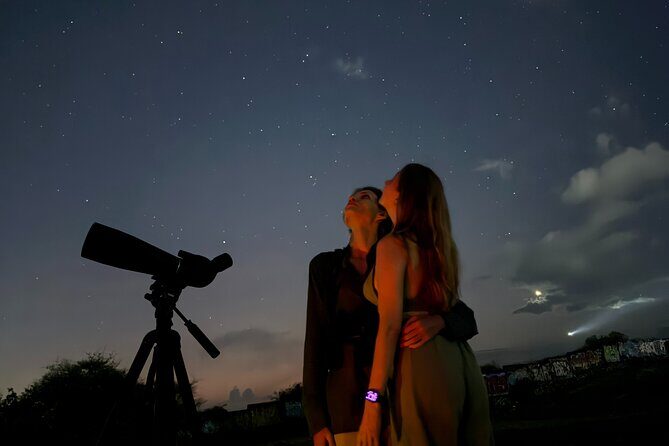
- Private group, up to 5: it stays cozy, beginner-friendly, and question-based.
- Multiple viewing tools: high-quality telescopes, binoculars, a spotting scope, plus a smart astrophotography camera.
- Real sky highlights: the tour focuses on objects like the Moon’s craters, Saturn’s rings, and Jupiter’s moons (depending on conditions).
- Coffee plus starmap: you get a brewed coffee moment, plus a starmap and an astronomy pocket guide.
- 20 minutes for photos/documentation: dedicated time to capture the night sky.
- Good weather matters: the session requires clear enough skies for good viewing.
Why Munggu Beach at 6:30pm changes the whole experience
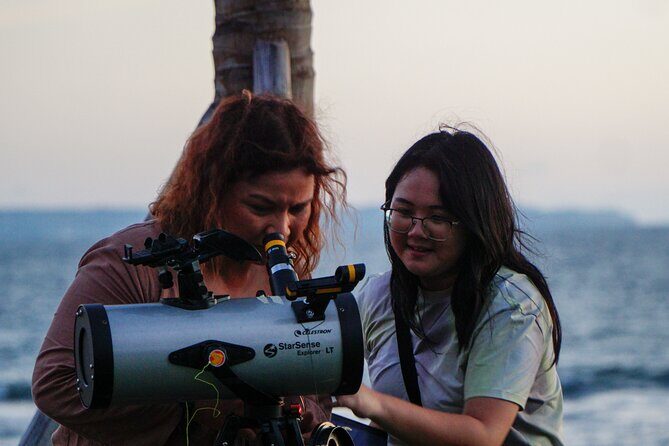
This tour starts at 6:30pm right by the ocean at Munggu Beach Sea, Bali. That timing matters because you’re not trying to “rush” darkness. You’re in place as the sky turns from twilight into something truly black enough to show stars.
I also like that it’s private. Up to five people in your group means you get more attention and less waiting. If someone in your crew is excited about Saturn, and someone else just wants to learn constellations, the guide can steer the pace without juggling a big crowd.
The setting is simple and calm: you’re on the beach, under the sky, with a coffee brewing moment built in. That sounds small, but it changes the feeling. Instead of a fast stop-and-go activity, you get time to settle in. The night starts to feel like a shared evening, not a ticketed performance.
And there’s a good practical layer here: a starmap and pocket guide are included, so what you see doesn’t vanish the moment you leave. You’ll be able to look again later, not just remember the wow factor.
If you're still narrowing it down, here are other tours in Kuta we've reviewed.
Telescopes, binoculars, and a smart astro camera you actually use
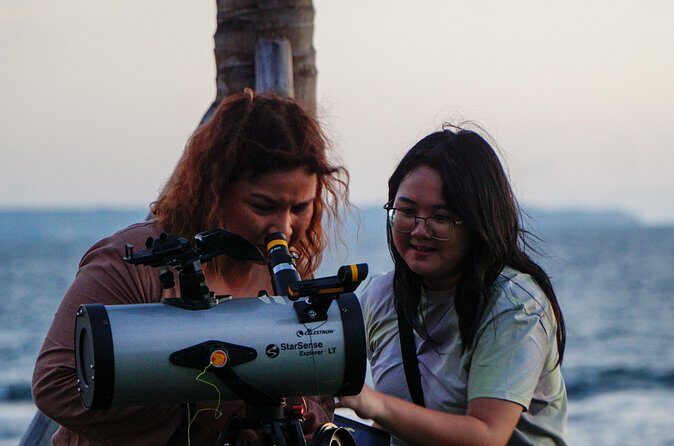
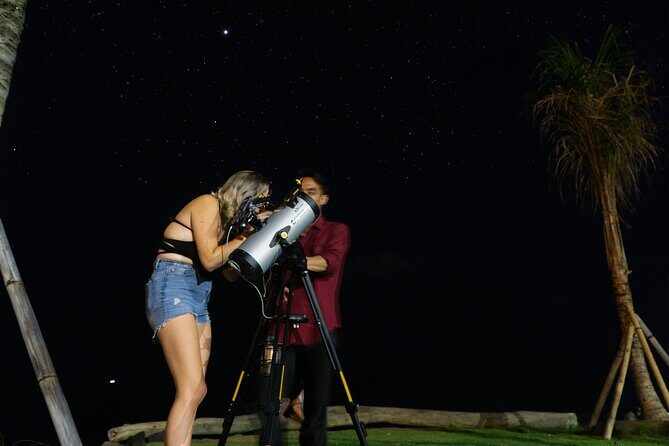
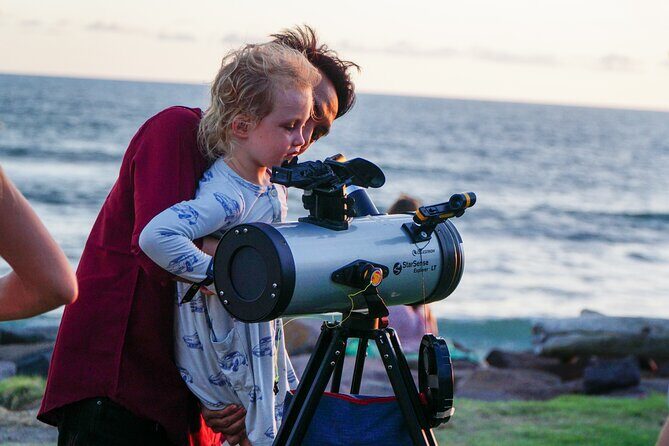
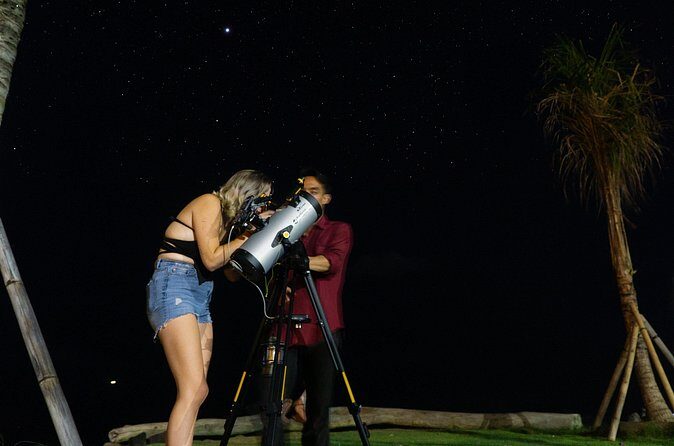
A lot of astronomy tours are basically show-and-tell: you stand around, look for ten seconds, then move on. This one is different because you’re expected to handle the equipment. In the included gear list, you’ll see high-quality telescopes, binoculars, and a spotting scope, plus a smart astrophotography camera.
That hands-on part is valuable for two reasons. First, it helps you understand how the viewing works. You don’t just stare; you learn how focus, framing, and positioning change what you see. Second, it makes the night more satisfying. When you can operate the gear, the objects feel less mysterious and more like a skill you’re building.
The tour is also designed around a classic beginner-friendly target list. The Moon is usually the easiest win, and this experience explicitly aims for the Moon’s craters. After that, if the sky cooperates, you shift toward bigger headline objects like Saturn’s rings and Jupiter’s moons. The key is that the specific targets depend on weather, which keeps expectations realistic.
Photography isn’t just a quick “maybe we’ll try.” There’s a dedicated 20 minutes for photography and documentation under the stars. Even if you’re not a pro, that focused time makes a difference. You’re not scrambling with a camera while the sky is slipping away.
Moon craters, Saturn rings, and Jupiter moons: what you’re chasing
Here’s the mindset that will make the most of the night: you’re not chasing one single view. You’re building a sequence of “aha” moments, from familiar to mind-blowing.
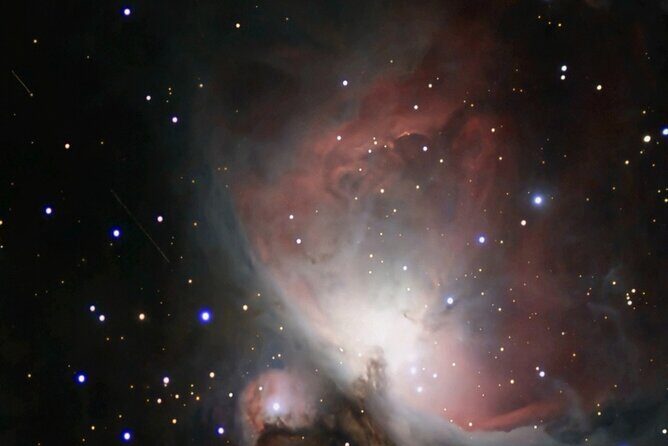
The Moon is the anchor. When you’re shown craters through the right equipment, the difference between a smooth disk in the daylight and a textured world at night hits hard. It’s also a great training object because it gives you something clear and consistent.
Then comes Saturn, with its famous rings. In many places, Saturn is a hard target for casual viewing. Here, the tour is structured around aiming for it when conditions allow, so you’re more likely to see it than if you were winging it on your own.
Jupiter is another headline target, and this tour includes the idea of Jupiter’s moons. If you’ve never seen moons around a bright planet before, it’s one of those lessons your brain remembers. You start thinking differently about what “far away” means.
And the guide doesn’t treat this as a lecture. They’ll walk you through constellations, share sky stories, and answer your questions. That combination matters. You get the visual, then you get the meaning.
The story-and-science blend that keeps it from feeling like homework
Space facts can land in a boring way. This experience avoids that by mixing explanation with story. You’ll get fun astronomy trivia and sky stories while you’re looking through telescopes and binoculars. The goal is that learning feels like a conversation.
A big part of that conversational vibe is permission to ask anything. The tour is explicitly built for curious minds, so you’re not stuck nodding through concepts you don’t care about. If you’ve wondered how telescopes actually work, or what makes one object show up and another not, you can ask and get a real answer.
This “heart plus science” approach is also why beginners tend to enjoy it. You don’t need prior knowledge. You just need curiosity and the willingness to look, adjust, and try again. When the guide shows you how to use the equipment, your confusion turns into progress.
Even the small details support the tone. Coffee brewing under the stars makes it feel human. A take-home starmap and pocket guide turn the lesson into something you can revisit without relying on memory alone.
A realistic 2.5-hour flow (and where the focus time happens)
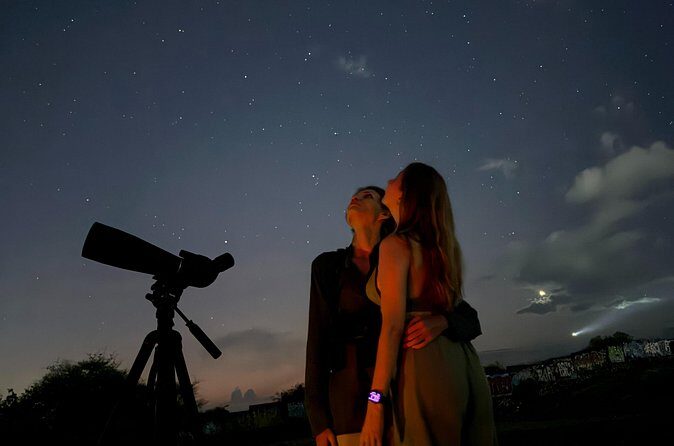
The session runs for about 2 hours 30 minutes, and it’s designed to keep momentum without feeling rushed. Here’s a practical sense of how the time likely moves, based on what’s included.
You start at Munggu Beach Sea at 6:30pm. The guide sets the stage and gets everyone settled in the viewing area. There’s a coffee brewing experience included, which usually becomes a natural reset point. You get warm and relaxed before the sky really delivers.
After that, you shift into sky navigation: constellations first, then specific targets as the sky allows. The Moon and planets are the “big moments,” but the guide also helps you connect the dots so you understand what you’re seeing instead of treating it as random points of light.
The hands-on gear use is spread across the session. You’ll look through different tools, which helps you understand why each device has a job. Telescopes handle the detailed views. Binoculars can help you catch things more broadly. A spotting scope can be another way to frame the sky depending on how it’s set up.
Then there’s a dedicated 20-minute photography/documentation window. This is prime time to experiment, since you’re not juggling waiting or setup while the session winds down.
Finally, you wrap back at the meeting point. You also get the included starmap + astronomy pocket guide + surprise goodies to take home, which is a nice way to keep the night from ending the moment you pack up.




Price and value: $191.49 for up to five people
At $191.49 per group (up to 5), this is priced for people who want a private night with real equipment. The math helps: if you fill the group limit, it works out to roughly $38 per person. If you’re only booking for two, the per-person cost is higher, so value depends on how you travel.
What you’re paying for is more than “a telescope.” You’re paying for:
- multiple included viewing tools,
- hands-on help learning how to use them,
- a smart astrophotography camera experience,
- coffee brewing time,
- a starmap and pocket guide,
- and a portion of proceeds supporting Munggu Village (Seseh).
That support angle matters to me because it turns an activity into something with local impact. It’s not just consuming scenery.
You should also know what’s not included: tips/gratuities are appreciated but not required, and taxes/fees aren’t listed as included. Also, the tour uses a mobile ticket, which is usually painless but means you’ll want your phone charged.
The biggest value argument is the combination of private attention and equipment time. If your main goal is learning how to look, not just seeing something once, this tends to make sense financially.
Getting the best night sky in Bali: plan for change
This experience requires good weather. That’s not a small note. It’s the difference between a confident “Saturn moment” and a quieter night focused on what’s visible.
Because the tour targets objects like the Moon, Saturn, and Jupiter (depending on weather), you’ll get the most enjoyment if you treat the evening like a live forecast-based plan. You’re not forcing one outcome. You’re letting the guide choose the best targets for the conditions.
There’s also a practical benefit to a guide picking the right spot. In real stargazing, view quality is everything. If the team suggests the best viewing area based on conditions, it improves what you see and makes the equipment time more productive.
So my advice is simple: don’t overbook yourself afterward. Give the night space to run its course. When you’re outside with a telescope, patience is part of the experience.
Who should book this, and who might skip it
This is a great fit if you:
- want a private stargazing night instead of a big group event,
- are a beginner who wants clear help using the gear,
- care about photography and want 20 minutes specifically for it,
- enjoy a balance of facts and stories,
- like the idea of take-home learning tools (starmap, pocket guide, surprise goodies).
It might be less ideal if:
- you’re traveling with a strict schedule and can’t adapt if the sky is cloudy,
- you expect guaranteed views of specific planets regardless of weather,
- you’re booking solo and the group price doesn’t fit your budget.
Should you book AstroBali stargazing under the Bali skies?
I’d book it if you want an evening that feels personal, not performative. The cozy private format, the hands-on gear time, and the mix of constellations, Moon detail, and planet targets (when the sky cooperates) make it feel like you’re learning a skill, not just ticking off a photo spot.
If you can go with a flexible mindset about weather, and you’ll enjoy questions and hands-on learning, this is one of the better-value ways to spend a Bali night. It’s calm, it’s different, and you’ll leave with a starmap in your bag, not just blurry memories.
FAQ
How long is the stargazing session?
It runs for about 2 hours 30 minutes.
Is this tour private, and how many people are in the group?
Yes. It’s private, and the price is per group for up to 5 people.
Where is the meeting point?
You’ll start at Munggu Beach Sea, Bali, Indonesia.
What time does the tour begin?
The start time is 6:30pm.
Do I need any astronomy experience before I go?
No. It’s beginner-friendly, and you can ask questions throughout the experience.
What equipment is included for viewing?
You’ll use high-quality telescopes, binoculars, a smart astrophotography camera, and a spotting scope.
Is coffee included?
Yes. There is a complimentary coffee brewing experience under the stars.
What happens if the weather is bad?
The experience requires good weather. If it’s canceled due to poor weather, you’ll be offered a different date or a full refund.