REVIEW · KUTA
Surfing Activity with Beginner and Intermediate Lesson
Book on Viator →Operated by Galaxy Surf Bali · Bookable on Viator
Learning to surf in Kuta is easier than you’d think. Galaxy Surf Bali keeps the process simple, with surf lessons designed for real learning and a clear path from shallow-water basics to green-wave riding. I like that the instructors are experienced and certified in surf life saving, and you also get free photos and videos of your session, which makes the day feel like more than just a quick try.
The main thing to consider is that surfing depends on conditions. The experience requires good weather, so you may need to reschedule if sea state or timing doesn’t cooperate.
In This Review
- Key Things That Make This Surf Lesson Worth Your Time
- Kuta Beach Setup: Why This Spot Works for First-Time Surfers
- Picking Beginner vs Intermediate: What Changes in Your Lesson
- Beginner Surf Lesson: When You’re Brand New (Including Non-Swimmers)
- Intermediate Surf Lesson: When You Can Paddle and Want the Next Step
- The 90-Minute Flow: What Happens From Start to Finish
- Step 1: Meeting at Galaxy Surf Bali (Kuta Beach)
- Step 2: Safety and Ocean Knowledge
- Step 3: Board Basics and Wave Timing
- Step 4: Riding and Coaching in Real Time
- Step 5: Wrap-Up and Head Back
- Coaching Style and Safety: How Certified Instruction Helps You Learn Faster
- Photos and Videos Included: Turning a Lesson Into Real Memory
- Price and Value at $18.24: What You’re Really Paying For
- Practical Tips Before You Go to Galaxy Surf Bali
- Choose the level that matches your real ability
- Plan to be present and ready for water time
- Expect ocean work, not just standing
- Use the included media wisely
- Who This Lesson Is Best For (And When to Wait)
- Should You Book Galaxy Surf Bali Surf Lessons?
- FAQ
- Where is Galaxy Surf Bali located?
- How long is the surf lesson?
- Can a non-swimmer join the beginner lesson?
- What does the intermediate lesson include?
- Are photos and videos included?
- What if I cancel or the weather is bad?
- Is this a private experience?
Key Things That Make This Surf Lesson Worth Your Time
- Beginner-friendly setup at Kuta Beach with shallow-water practice and foam-wave rides
- Non-swimmers can join the beginner option (age 4 to 60), so it’s not just for athletic people
- Intermediate training to the line up to learn etiquette, positioning, and catching green waves
- Coaching from certified surf life saving instructors focused on safety and ocean basics
- Free photos and videos so you can actually remember what you did in the water
- Private experience for your group (it’s not mixed with random strangers)
Kuta Beach Setup: Why This Spot Works for First-Time Surfers
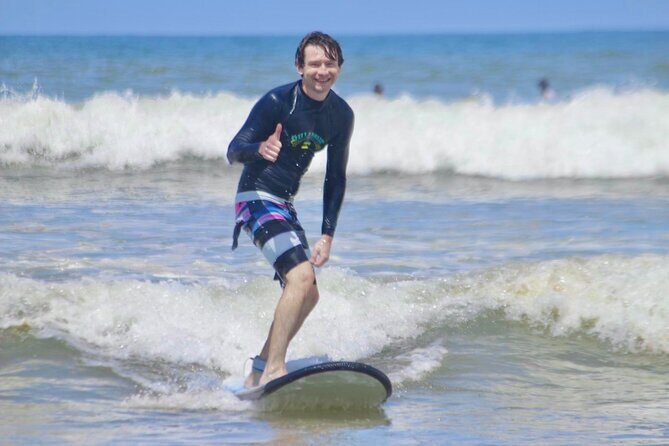
Kuta Beach is popular for a reason: it’s built for getting in and out, and it’s familiar enough that learning can be structured. Galaxy Surf Bali specifically says this location is one of the safer places to learn, and that matters when you’re trying to figure out waves, balance, and confidence all at once.
A good beginner surf lesson should help you feel oriented fast. Here, the plan starts with ocean knowledge and safety, then moves into board basics before you get anywhere near the real drama of bigger sets. If you’ve ever tried to copy surfing videos at the beach and felt totally lost, you’ll appreciate how they slow the learning down.
The other big advantage is that the beginner lesson is done where you can actually practice. You’ll work on shallow water and ride foam waves. That’s a smart choice for most people because it’s how you build muscle memory without getting overwhelmed.
If you're still narrowing it down, here are other tours in Kuta we've reviewed.



Picking Beginner vs Intermediate: What Changes in Your Lesson
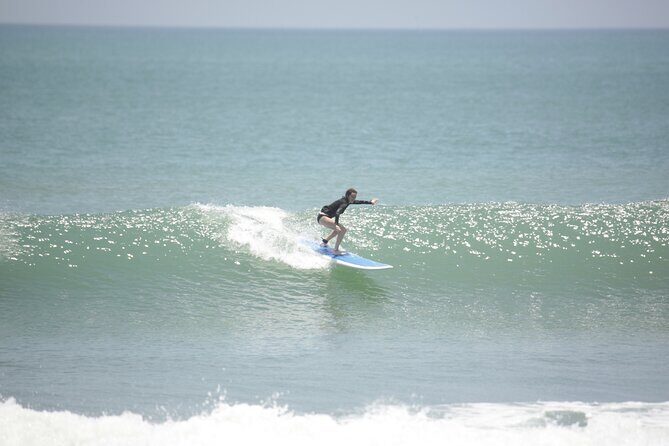
Galaxy Surf Bali offers two separate tracks, both about 90 minutes. Choosing the right one is the difference between feeling thrilled and feeling frustrated.
Beginner Surf Lesson: When You’re Brand New (Including Non-Swimmers)
The beginner option is designed for everyone age 4 to 60, including non swimmers. You’ll start with ocean knowledge and safety, then learn the fundamentals:
- how to stand up on the board
- how to paddle
- how to catch the waves
- and how to ride the foam waves
The key is that the instruction is built for early success. Shallow-water practice gives you time to learn the rhythm of paddling and timing without the fear factor that comes with being far from shore.
Intermediate Surf Lesson: When You Can Paddle and Want the Next Step
The intermediate session takes you out to the line up. That changes everything: you’re no longer just learning technique, you’re learning how surfers move in and around breaking waves.
You’ll cover:
- surfing etiquette
- paddling technique
- how to pass breaking waves
- positioning on the line up
- riding waves properly
- turning and carving turns
- and catching the green waves
If you’ve already learned to stand up and want more flow in your surfing, this is the logical next move. The focus shifts from basic balance to actual wave-reading and control.
The 90-Minute Flow: What Happens From Start to Finish
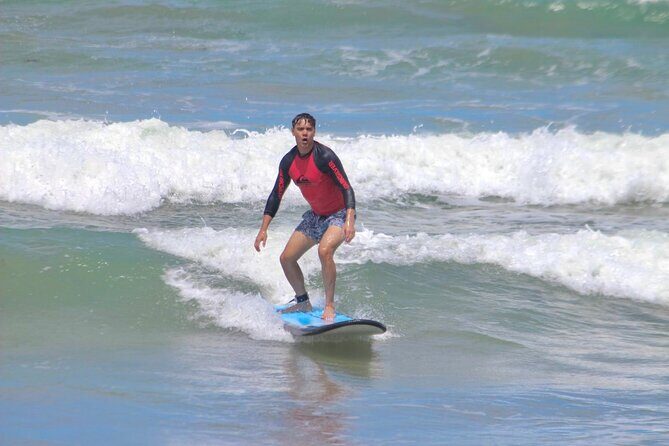
The lesson returns to the meeting point, and the full session runs about 1 hour 30 minutes. In that time, the goal is simple: give you a skill ladder you can feel while you’re still in the water.
Here’s the practical way the day typically unfolds with this kind of structure.





Step 1: Meeting at Galaxy Surf Bali (Kuta Beach)
You start at Galaxy Surf Bali on Jl. Pantai Kuta, Kuta, Kec. Kuta, Kabupaten Badung, Bali 80361, Indonesia. Since it’s at Kuta Beach, you’re already in the right place to learn and adjust quickly if conditions change.
This matters because surfing is a timing sport. If you arrive late, you’re not just late for a schedule—you might miss the easiest waves for learning.
Step 2: Safety and Ocean Knowledge
Before you ride anything, you get safety instruction. They also teach ocean basics, which is more useful than most people expect. Even a short lesson is a chance to learn how to think about the water: how waves break, why some spots feel safer, and what you should do when conditions shift.
This is where certified surf life saving credentials matter. It’s not about fear. It’s about clear, calm guidance so you know what to do and what not to do.
Step 3: Board Basics and Wave Timing
For beginners, you’ll practice in shallow water and ride foam waves. Foam waves are great because they’re forgiving. You can focus on board control and getting that first clean stand without fighting a powerful impact.
For intermediates, you’ll work through more advanced mechanics. Passing breaking waves, for example, isn’t just physical effort—it’s decision-making. You learn how to time your movement so you don’t get tossed at the worst moment.
Step 4: Riding and Coaching in Real Time
The best lessons don’t just explain. They adjust while you’re trying. With this format, you’ll get guidance on paddling, catching, standing, turning, and carving turns (for intermediate level). The coaching goal is to fix one or two things at a time, so you progress during the 90 minutes instead of just leaving with tips.
Step 5: Wrap-Up and Head Back
The activity ends back at the meeting point. That’s nice because you’re not dealing with complicated transfers afterward—just exit the beach experience and let your body cool down.
Coaching Style and Safety: How Certified Instruction Helps You Learn Faster
Surfing is one part technique and one part comfort. If you feel safe, you try more. If you understand the water, you panic less.
Galaxy Surf Bali emphasizes instructors who are experienced and certified in surf life saving. In real terms, that shows up in the basics: safety talk that makes sense, clear guidance about movement in the water, and instruction that stays focused on what you need for your level.
One name that comes up for teaching is Sardo. If you’re lucky enough to work with him, expect hands-on coaching that helps you stand up sooner rather than spending the whole session stuck paddling and hoping. Even when you’re brand new, that kind of attention can change your entire first impression of surfing.
If you’re intermediate, your confidence likely comes from technique. But intermediate progress also depends on learning the social rules of the lineup and how to move past breaking waves. That’s where structured instruction prevents the most common frustration: getting out there and feeling like you’re always in the wrong place.
Photos and Videos Included: Turning a Lesson Into Real Memory
This is one of the best “small” perks because it directly helps your learning. You get free photos and videos of you while you ride the waves.
Why that matters:
- You can review what your body actually did, not what you thought you did
- You can spot patterns in your paddling and timing
- You’ll have proof of progress, which helps on any future surf day
Also, this turns the experience into something you’ll share easily. A short surf lesson can feel like a blur when you’re in the moment. Video gives you a way to remember the exact feeling of a successful catch or a better stand.
Price and Value at $18.24: What You’re Really Paying For
At $18.24 per person, this lesson lands in the budget-friendly zone for Bali activities. But the value isn’t only the low price. It’s what you get attached to it: instruction that fits your level plus media (photos and videos) that normally costs extra in many other experiences.
You’re also booking a private tour/activity for your group. That’s a quiet advantage. Even if the exact group size isn’t described, “only your group will participate” usually means you spend less time waiting and more time practicing.
If you’ve ever felt ripped off when paying for a class that barely includes coaching time, this is the kind of setup that feels fair because the 90 minutes are structured around actual skill-building: safety, paddling, catching waves, and riding.
The one value-risk is weather. Since the experience requires good weather, sometimes you can’t control your timing. But the trade-off is that the lesson isn’t trying to happen in poor conditions just to keep a schedule alive.
Practical Tips Before You Go to Galaxy Surf Bali
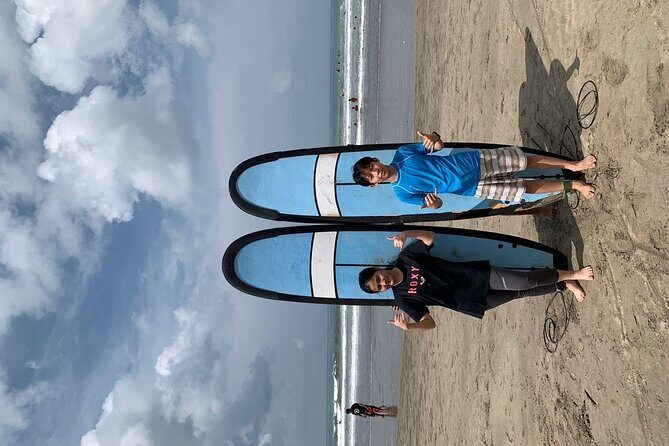
Here’s how to make your lesson day smoother, based on what the experience focuses on.
Choose the level that matches your real ability
- Beginner: if you’ve never surfed, or you want instruction even as a non-swimmer.
- Intermediate: if you already know how to stand up and catch waves enough to handle a trip to the line up.
Picking the wrong track is the fastest way to waste energy.
Plan to be present and ready for water time
Kuta Beach sessions move fast. Arrive early so you’re not rushing through the safety talk or scrambling to get your bearings.
Expect ocean work, not just standing
Surfing lessons teach ocean knowledge, paddling technique, passing breaking waves (intermediate), and turning/carving turns (intermediate). That means you’ll work your arms and core. You’ll feel it later, even if you’re only in the water for 90 minutes.
Use the included media wisely
When your photos and videos come through, treat them like feedback. Look for the moment when you stand or when you catch the wave. That’s your next practice target for any future session.
Who This Lesson Is Best For (And When to Wait)
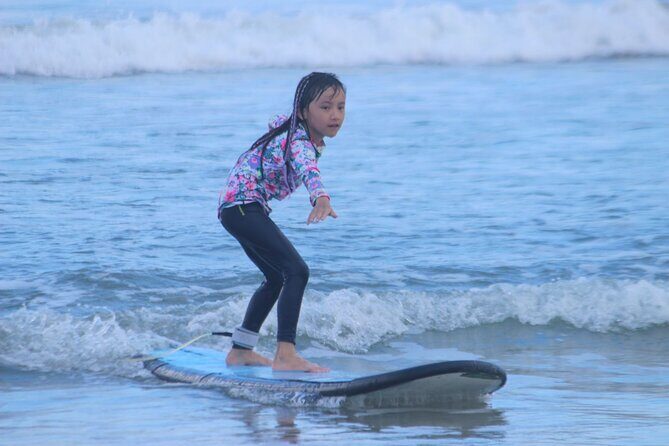
This is a strong fit if you:
- want a clear beginner path, including non-swimmers (age 4 to 60)
- are ready to practice in shallow water and foam waves
- want a guided step up into intermediate surfing with line up experience
- care about safety and instruction that’s built around surf life saving certification
- like the idea of getting photos and videos to track progress
It may not be the best match if:
- you’re expecting guaranteed conditions regardless of weather (surf depends on the sea)
- you’re looking for a long, full-day coaching immersion. This is 90 minutes, and it’s intentionally focused.
Should You Book Galaxy Surf Bali Surf Lessons?
I’d book this if you want value, real instruction, and a structured progression. The biggest reasons are the beginner-friendly non-swimmer option, the fact that intermediate students get proper line up training, and the inclusion of free photos and videos.
If you’re on the fence, pick based on your current comfort level, not your ambition. Beginner lessons are designed for safety and early wins. Intermediate lessons push you further into real lineup surfing. Choose the right lane, and you’ll leave the beach with skills you can build on right away.
FAQ
Where is Galaxy Surf Bali located?
The lesson starts at Galaxy Surf Bali, Jl. Pantai Kuta, Kuta, Kec. Kuta, Kabupaten Badung, Bali 80361, Indonesia, and the activity ends back at the meeting point.
How long is the surf lesson?
Both the beginner and intermediate lessons last about 1 hour 30 minutes (90 minutes).
Can a non-swimmer join the beginner lesson?
Yes. The beginner surf lesson allows non swimmers, and it’s suitable for ages 4 to 60.
What does the intermediate lesson include?
The intermediate lesson takes you out to the line up to catch green waves. You’ll learn surfing etiquette, paddling technique, how to pass breaking waves, positioning on the line up, and riding skills including turning and carving turns.
Are photos and videos included?
Yes. At each session, you get free photos and videos of you while you are riding the waves.
What if I cancel or the weather is bad?
Free cancellation is available if you cancel up to 24 hours in advance for a full refund. If the experience is canceled due to poor weather, you’ll be offered a different date or a full refund.
Is this a private experience?
Yes. It’s a private tour/activity, and only your group participates.