REVIEW · KUTA
Surfing Group Lesson Level 1 Beach Surfer
Book on Viator →Operated by Rip Curl School Of Surf · Bookable on Viator
Surf lessons in Bali can be chaotic. Not here.
This Level 1 course is built for total beginners who want structure, not guesswork. I like the small 5:1 coaching approach and how the school backs it up with safety-minded instruction you can feel in the comments, including named instructors like Budi and Gung. The one thing to watch: Double Six can mean bigger sets some days, so you’ll need to listen closely and match your pace with the conditions.
The practical side is strong. You get door-to-door transfers from many key south Bali areas, plus a full kit that’s unusually thoughtful for a beginner program—rash guard and leggings, board setup, and even imported zinc. The schedules can run to early mornings (and waves depend on tide/wind), so plan your expectations around the ocean, not the clock.
For $155, you’re basically buying five focused sessions that cover the basics and help you go from standing awkwardly to riding with more control. Each day is about 2 hours, with theory mixed in so you’re not just flailing—plus there’s a study book and shower facilities waiting afterward.
In This Review
- Key highlights you’ll actually care about
- Legian’s Double Six for beginners: the simple reason this course works
- The 5-day flow: theory, practice, and practical riding
- Coach attention at 5:1: how it feels when you’re actually learning
- Gear and protection: included rash guard, zinc, and the stuff you’d forget
- Transfers from south Bali: saving time and stress before you paddle
- What happens at the surf school base: lockers, showers, and photos
- Price and value: what $155 really buys you
- Who this course is best for (and who should think twice)
- Should you book this surf lesson in Kuta/Legian?
- FAQ
- What level is this surf lesson course?
- How long are the lessons, and how many days is the course?
- What’s included, and do I need to bring a swimsuit?
- Do you pick me up from hotels in south Bali?
- How big are the groups?
- What happens if weather is bad or I need to cancel?
Key highlights you’ll actually care about
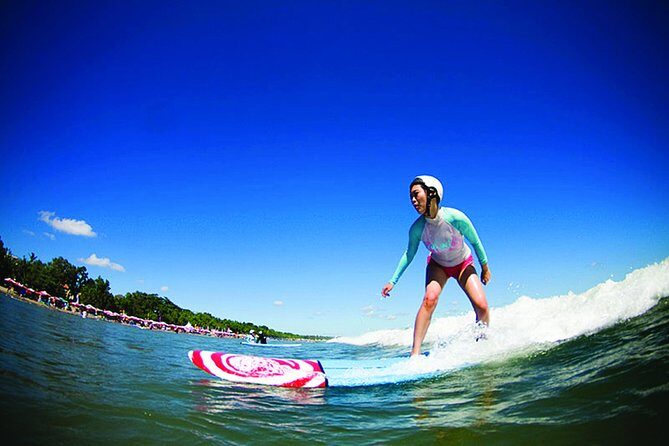
- Five 2-hour lessons over 5 days at Rip Curl School of Surf, starting at multiple daily time slots
- 5:1 student-to-instructor/assistant ratio so you’re not lost in a crowd
- Equipment included end-to-end, from board and leg rope to a helmet, rash guard, leggings, and zinc
- Pickup and drop-off from many south Bali locations like Legian, Seminyak, Kuta, Uluwatu, Nusa Dua, and Sanur
- Ocean-safety focus with a beginner syllabus plus a downloadable study book
- Comfort after surfing: fresh showers, towels, lockers, and fruit/drinks after class
Legian’s Double Six for beginners: the simple reason this course works

Double Six Beach (Legian area) is the kind of spot that makes surf learning possible without turning it into a survival test. You’re not expected to already know how to read waves or paddle efficiently. Instead, the course gives you a repeatable rhythm: a short theory foundation, then hands-on practice, then a more practical run at the skills.
What I like most is that the program is designed around “learn fast, but safely.” With Level 1 Beach Surfer, the goal is to get you past the first barrier—fear plus confusion—so you can start making progress within a few sessions. The course summary also points to the usual beginner wins: getting your first real rides, learning to turn, and building ocean safety habits that keep you out of trouble.
If you’re choosing this because you want confidence, this course is aligned with that. In the feedback, people repeatedly highlight feeling safe and welcome, and they call out patient coaching. That matters more than “cool beach vibes,” because surf is one of those sports where confidence and technique are inseparable.
One more thing: the school schedules different lessons based on tide, wave size, and wind. That doesn’t mean everything is predictable. It means you’ll get your session when conditions are best for your level.
If you're still narrowing it down, here are other tours in Kuta we've reviewed.



The 5-day flow: theory, practice, and practical riding
You get five lessons, each about 2 hours, spread across five days. The school runs multiple daily time slots—8:00 am, 10:00 am, 1:00 pm, and 3:00 pm. Which slot you land on can change with tide and conditions, and the final schedule is confirmed one day in advance.
Here’s how that structure helps you as a beginner:
- Theory early: You’re not just learning by trial and error. The course aims to teach the fundamentals and ocean safety, so when something feels confusing in the water, you have a mental map.
- Practice after: You work on the mechanics—how you approach the board, your body position, and how to manage the early stages of paddling and wave contact.
- Practical runs: You then try to apply those skills under real surf conditions, not in a classroom.
Across the course, the big theme is progression. The overview promises you’ll go from zero to hero in five sessions, with the end goal tied to catching your first wave, learning to turn, and improving ocean-safety awareness.
From a “will this help me?” angle, the repetition is the value. Five separate sessions give you time to digest what you learned, then test it the next day when the conditions and muscle memory are slightly different.
Coach attention at 5:1: how it feels when you’re actually learning
Surf lessons can either feel like a coach directing you from afar—or like someone is watching what your body is doing and fixing it fast. This course is positioned firmly in the second category.
The included info is clear: regular 5:1 ratio with an instructor/assistant. That ratio is high enough for beginners to be seen, but small enough for the coach to adjust details quickly. In the feedback, people note instructors being patient and professional, and they talk about coaches who make you feel safe without pushing you into discomfort.
The names that show up in comments (like Budi and Gung) give you a clue about coaching consistency: this isn’t “random surf guide energy.” It’s more like a school with a teaching flow.
What that means for you:
- You’re less likely to spend most of the lesson waiting your turn.
- You can get corrections while you’re still thinking clearly (which is when they actually stick).
- You have more chances to try again after a wipeout, with guidance that’s tailored to what went wrong.
If you’re the type who freezes when you’re unsure, the small groups and patient instruction can be a real confidence booster.
Gear and protection: included rash guard, zinc, and the stuff you’d forget
Beginner surf lessons succeed or fail based on equipment and comfort. This one covers a lot of the annoying “I don’t have the right stuff” problems.
Included gear details:
- Surf board and leg rope
- Gath surf helmet
- Rip Curl rash guard & leggings
- Imported zinc
- Shower facilities with soap and shampoo, plus a towel
- Sealed drinking water during the course
Also in the overview: they mention equipment even includes board shorts and sunscreen. Even if you show up unsure, you won’t be completely empty-handed.
So what do you still bring?
- Your own swimsuit (bikini or board shorts).
That’s it. Everything else that usually slows people down is handled for you.
Why this matters: sunscreen and zinc are big deals in Bali, and they’re not “optional extras.” A beginner wearing the wrong layer or no protection can burn fast, feel miserable, and miss the whole point of learning. With zinc and a rash guard supplied, you can focus on technique instead of skin.
Transfers from south Bali: saving time and stress before you paddle
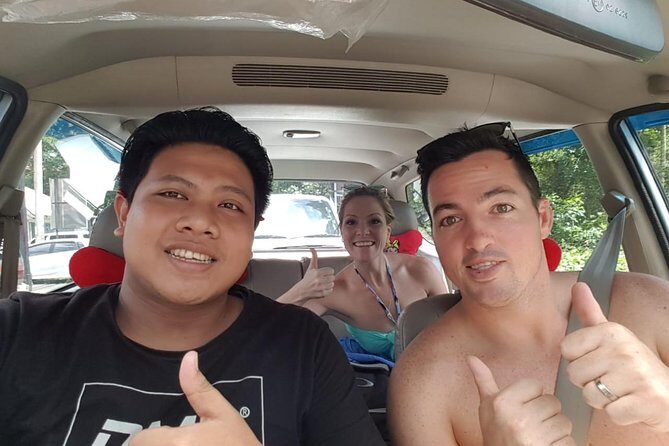
Kuta, Legian, Seminyak, Uluwatu—Bali’s traffic can turn a simple plan into a headache. This course includes transport pick-up and transfer back from a long list of areas:
Legian, Seminyak, Oberoi, Canggu, Kuta, Jimbaran, Uluwatu, Nusa Dua, and Sanur.
That’s a big value piece at this price point, because it removes two common beginner issues:
1) you don’t need to figure out how to get to the beach school early, and
2) you’re not rushing in with sore shoulders from hauling bags around.
The meeting point is listed at Rip Curl School of Surf at Hotel Prama Sanur Beach. In practice, the pickup list is the key. If you’re within the coverage area, you get the convenience of a round-trip plan.
One practical note: lessons can be early, because early mornings often offer the best conditions. If your body hates 7 am, you can still do it, but you’ll feel it. Plan to hydrate and keep breakfast simple.





What happens at the surf school base: lockers, showers, and photos
Surfing doesn’t end when you get out of the water. You need to clean up and reset, or you spend the rest of the day feeling sticky and salty.
This school’s facilities are spelled out:
- Changing rooms
- Individual locker facilities
- Fresh water showers with soap and shampoo
- Towels
- A chill-out area with cold drinks and tables/chairs
That lounge detail sounds small until you’ve just come off the beach with wet gear. Having a real place to sit and cool down helps you keep your energy for the next session.
There’s also a photography element. The school’s photographers take photos during the lessons, and those photos are for sale after you finish the program. You’re not required to buy anything—but if you want a reminder of how chaotic your first rides looked, it can be worth checking.
Another included comfort: they provide free fresh fruits after the lesson and the overview mentions tea and coffee too. Since food isn’t listed as included, having at least some drinks and fruit helps bridge the gap until you eat.
Price and value: what $155 really buys you
Let’s talk value without fluff. $155 for five days at about two hours a day is only a good deal if the extras are real—and here, they are.
You’re getting:
- 10 total hours of instruction across five sessions
- 5:1 coaching ratio
- All core equipment (board, leg rope, helmet, rash guard, leggings)
- Imported zinc and drinking water
- Fresh showers, towel, lockers, changing rooms
- Round-trip transfers from many south Bali areas
- A $1 million USD liability insurance component
- A study book during the course (with soft copies downloadable)
If you price that out in parts—transport, wetsuit/rash guard alternatives, and instruction time—it starts to make sense why this sits at this level. The course isn’t just “rent a board and good luck.” It’s built like a packaged learning program.
The main tradeoff is that you’re booking a beginner level experience. That’s exactly what you want if you’re new. It’s less ideal if you already surf regularly and want advanced wave strategy. Also, the ocean controls the agenda: schedule shifts can happen because of tides and wind, and the course requires good weather.
Who this course is best for (and who should think twice)
This is a strong fit if you:
- are new to surfing or still at a true beginner stage
- want a plan with structure (theory + practice + practical)
- care about safety and getting corrected before habits harden
- want easy logistics with pickup/transfer in south Bali
- like the idea of learning in a small group instead of a crowd
You might rethink it if:
- you want a purely recreational, no-instruction beach day
- you already have consistent surfing skills and need advanced coaching
- you strongly dislike early starts (some sessions will be early)
Should you book this surf lesson in Kuta/Legian?
If your goal is simple—learn to surf without guesswork—then this course is easy to recommend. For many beginners, the combination of 5:1 coaching, included gear like zinc and rash guard, and south Bali door-to-door transfers is exactly what makes progress feel realistic.
Book it if you want to show up, follow a clear plan, and leave with better ocean safety instincts plus the early riding skills that keep you coming back. Skip it only if you’re already surfing at an intermediate level and want more specialized, high-performance coaching.
If you’re ready to trade a few mornings for real technique work, this is a solid value way to start.
FAQ
What level is this surf lesson course?
This is Level 1 (Beach Surfer) training designed for beginners, including people who have never surfed before or are still early in their learning.
How long are the lessons, and how many days is the course?
You’ll do five lessons across about five days, with regular 2-hour lessons each day.
What’s included, and do I need to bring a swimsuit?
You get the surf setup and course items, including a board and leg rope, a surf helmet, a rash guard and leggings, imported zinc, drinking water, towels, and shower facilities. You do need to bring your own swimsuit (bikini or board shorts).
Do you pick me up from hotels in south Bali?
Yes. Pickup and transfer back are included for areas listed such as Legian, Seminyak, Oberoi, Canggu, Kuta, Jimbaran, Uluwatu, Nusa Dua, and Sanur.
How big are the groups?
The course uses a regular 5:1 ratio of students to instructor/assistant.
What happens if weather is bad or I need to cancel?
The experience depends on good weather. If it’s canceled due to poor weather, you’ll be offered a different date or a full refund. Cancellation is free up to 24 hours in advance for a full refund, and changes within 24 hours aren’t accepted.