REVIEW · KUTA
The best surf lessons in Kuta
Book on Viator →Operated by Bali Surf Class · Bookable on Viator
Learning to surf can start fast in Kuta. This private 2-hour lesson is built for first-timers, with clear safety lessons followed by real time in the ocean. The best part is how the coaches shape your experience around how you’re doing, not some one-size plan.
I like that you get personal attention in a private setup, and you’re not left to figure things out alone once you’re in the water. I also like the practical pacing: safety and theory up front, dry-land drills, then two ocean blocks with a break to reset.
One thing to consider is that Kuta conditions can shift with the weather and tide, so the lesson may feel more or less “chill” depending on the day. The team works with what’s happening, but if you’re very sensitive to rougher water, plan to go with a flexible mindset.
In This Review
- Key highlights you should know
- Kuta Beach makes the first board less scary
- The private 2-hour rhythm: theory, dry land, then waves
- Surf gear and water: what’s covered for you
- How coaching works when you’re a first-timer
- Entering the ocean: paddling for 45 minutes the smart way
- The break isn’t optional: reset, drink, go again
- Back in the water for round two: turning effort into progress
- Meeting point on Kuta Beach: what to look for
- When to go: tides, weather, and why timing changes everything
- Who this surf class is best for
- Value for $25: why this feels like a smart first lesson
- Weather changes and flexibility: how to stay calm if plans shift
- Should you book this Kuta surf lesson?
- FAQ
- How long is the surf lesson in Kuta?
- Is this surf lesson for complete beginners?
- Is the lesson private?
- What’s included in the price?
- Where do we meet for the lesson?
- Are showers and toilets included?
- What happens if the weather is poor?
Key highlights you should know

- Beginner-first teaching for complete newbies, with step-by-step coaching
- Private lesson format means quieter learning and more hands-on guidance
- Two ocean sessions (about 45 minutes each) separated by a short break
- Gear and basics included: surfboard, rash vest, and 500ml bottled water
- Surf safety + theory early so you understand what you’re doing before you get swept out
- Coaches stay with you in changing conditions, including high tide days
Kuta Beach makes the first board less scary
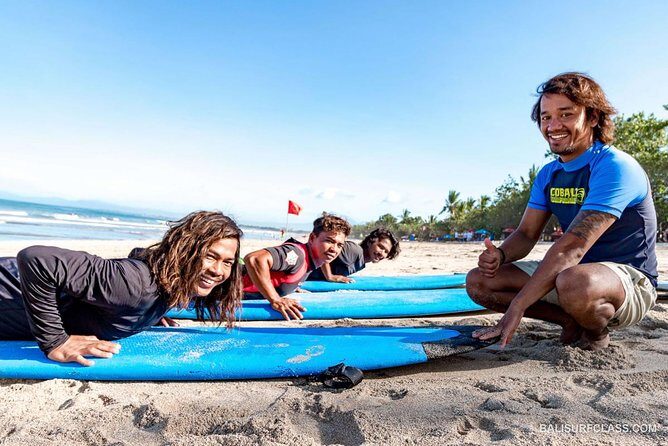
Kuta is a popular surf spot for a reason. For a first lesson, you want a place that gives you a chance to try, fail, and try again without feeling like you’re fighting the ocean the whole time. Kuta’s shoreline setup is often good for early skills, and the class is structured around that beginner-friendly reality.
You also get a huge advantage from the coaching approach. Instructors focus on where to look, how to position your body, and when to commit to a wave. Even when conditions are a bit rough, they help you pick the right waves for your experience level so you’re still learning, not just getting tossed around.
If you're still narrowing it down, here are other tours in Kuta we've reviewed.



The private 2-hour rhythm: theory, dry land, then waves
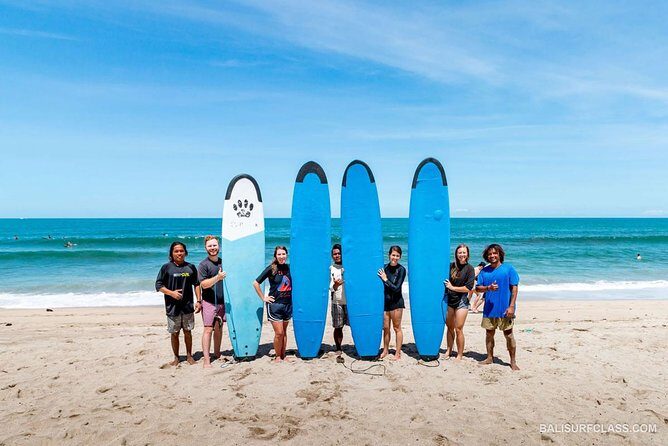
This class is short on purpose. Two hours is enough to give you the core surf pattern and enough ocean time to start building confidence.
Here’s the flow you can expect:
- First 20 minutes: surf safety and theory. You cover the basics you need before you paddle hard for your first attempt.
- Next: a few minutes of beach practicals. This is where you learn what you’re about to do, then rehearse it right away.
- Then into the water for about 45 minutes. You’ll spend time paddling, catching waves, and trying to stand.
- Quick break on the beach. You drink water, rest, and reset. This break matters more than people think because your body learns best when you’re not totally exhausted.
- Second ocean block for about 45 minutes. Round two is where many beginners feel the biggest change, because your brain already has the first session as a reference point.
At the end, the goal is simple: you should be ready to practice on your own. That’s a different goal than just doing one exciting ride.
Surf gear and water: what’s covered for you
For $25 per person, the lesson includes the things that stop beginners from feeling unprepared.
You’ll be provided:
- Surfboard
- Rash vest
- One 500ml bottled water per person
Rash vests are worth it even for a first timer. They help with comfort and skin protection while you learn wipeouts. The board is also a big deal because early surfers benefit from the right beginner-friendly setup, and you don’t want to be hunting for the wrong gear on your own.
Not included: public showers and toilets are available on the beach, but they cost extra. The good news is you’re not stranded without facilities, you just have to handle them separately.
How coaching works when you’re a first-timer
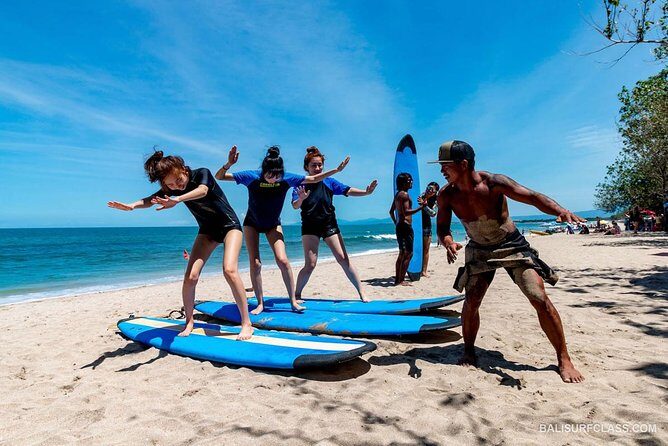
A beginner lesson lives or dies on instruction style. You want calm guidance, clear cues, and someone who watches what you’re doing, not just the waves you’re chasing.
This surf class emphasizes practical coaching:
- Instructors give clear, step-by-step directions.
- They stay attentive to whether you’re okay during the session.
- They adjust which waves you try based on how you’re handling the lesson.
In the feedback, names like Harman, Jerry, Eric, Robbie, and others show up because different groups get different instructors. What stays consistent is the teaching tone: patient, encouraging, and focused on helping you improve instead of rushing you.
You’ll also hear a lot about “waiting for the right wave” and “catching with intention.” That’s not motivational fluff. It’s how you avoid the classic beginner mistake: paddling hard at the wrong moment and then feeling like surfing is supposed to be painful.
Entering the ocean: paddling for 45 minutes the smart way
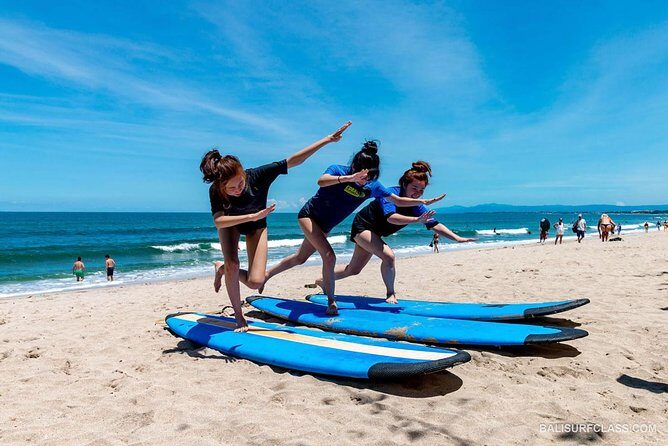
The first ocean block can feel like the hardest part, mainly because it mixes effort with uncertainty. You’re learning how to paddle, how to position your body, and how to time the start of a wave. That’s a lot for one session, so the pacing is key.
What makes the 45-minute block valuable is that you’re not only “trying.” You’re building a sequence:
- Get your body sorted on the board.
- Paddle with purpose.
- Watch for a wave you can actually use.
- Commit to standing attempts only when the wave is right for you.
One detail I think beginners underestimate: instructors help you choose the wave and match it to your level. That matters if you’re learning in conditions like high tide, when waves can feel less forgiving. When that happens, you’ll still have a plan.
By the time you finish this first round, you should have at least one moment where the board feels more stable and your timing improves. That first “I get it” moment is what makes the second ocean block click.





The break isn’t optional: reset, drink, go again
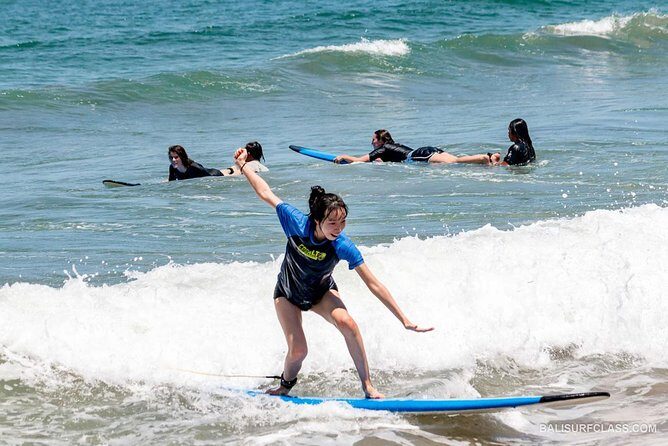
The short break on the beach is included on purpose. After paddling for 45 minutes, your legs and lungs are doing work even if you don’t feel like you’re “training.”
This reset helps you:
- Refocus on the instructions you heard earlier
- Hydrate before round two
- Take a breather so you can attempt standing with less panic
If you’ve ever tried to learn something physical back-to-back without rest, you know how fast frustration takes over. Here, the break acts like a small learning reset.
Back in the water for round two: turning effort into progress
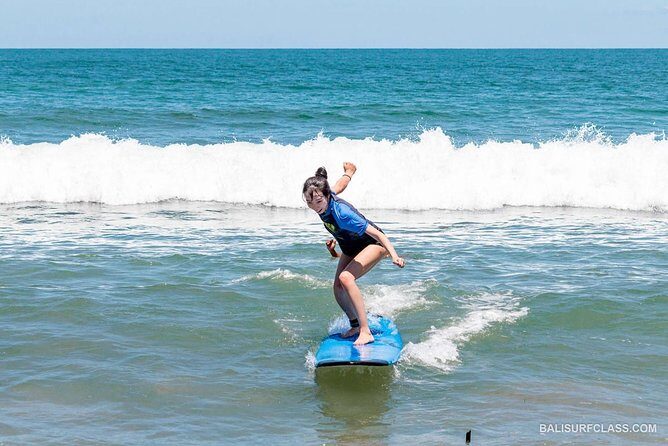
Round two tends to be where the lesson starts to feel like surfing instead of just water-time.
By this point you’ve already:
- Seen how the waves break
- Practiced the basic motion on land
- Learned what your body needs to do to stand more smoothly
During the second ocean block, the coaching continues with a focus on technique and safety. Many beginners in the feedback report real progress by the end of the class, even when they only started that day. A few people even returned the next day, which tells me the structure gives you enough momentum to keep practicing rather than quitting after the first wipeout.
You also learn quickly why surfing isn’t only about strength. It’s about timing, board control, and staying relaxed enough to let the wave do its job.
Meeting point on Kuta Beach: what to look for
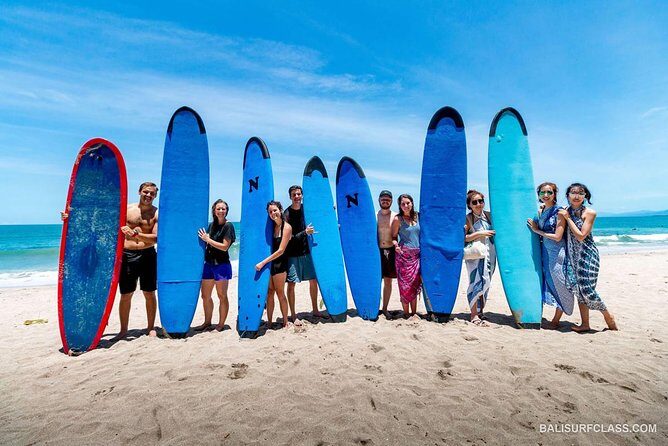
You meet at Bali Surf Class on the beach in front of ROSSO VIVO Italian Restaurant on Jl. Pantai Kuta, Kuta, Badung, Bali.
This matters because Kuta is busy and confusing at beach level. If you arrive a bit early, you’ll avoid the stress that can mess with your first learning moments.
Also note:
- The tour ends back at the meeting point.
- You’ll receive a mobile ticket.
- It’s near public transportation, which helps if you’re not hiring a private driver.
The lesson is about 2 hours total, so it’s easy to fit into a day even if you have other Kuta plans.
When to go: tides, weather, and why timing changes everything
This lesson comes with a useful message: tide conditions can make or break your first surfing experience.
They’ll recommend the best times and dates for your lesson, and you should take them up on that. Choosing the right tide can help you get waves that are easier to catch and stand on. The class itself also notes that beach conditions can change throughout the year due to weather, and that’s outside anyone’s control.
What I recommend:
- Ask for tide guidance when you book.
- Plan to be flexible if conditions require a change.
- Don’t show up expecting one perfect, movie-style wave. Show up expecting a lesson that works with the day you get.
That mindset helps you enjoy the learning, not judge the ocean.
Who this surf class is best for
This is ideal for complete beginners. It’s also a good choice if you want private attention and you don’t want a loud group controlling your learning pace.
It works especially well if:
- You want personalized coaching right from the start
- You learn better with step-by-step instructions
- You’re traveling as a couple or small group and want to do something active without overcommitting
The class also states you should have moderate physical fitness. That doesn’t mean you need to be an athlete. It does mean you’ll be paddling for extended stretches and trying to balance while water moves under you.
The feedback includes older beginners too, including people in their 50s, who were able to get up and ride. That’s a reassuring sign that the coaching isn’t only for young, athletic bodies.
Value for $25: why this feels like a smart first lesson
At $25 per person for roughly two hours, you’re paying for three things that matter most at the beginner stage: instruction, equipment, and time in the water.
Here’s where the value really shows:
- Instruction beats self-learning. Your first session is the most confusing. Paying for guidance shortens the learning curve.
- Gear is included. You don’t need to rent a board or hunt down a rash vest.
- The schedule is efficient. Two ocean blocks with a break gives you repetition without burning you out.
Given the overall rating and the sheer number of positive experiences, you’re not buying a vague “try surfing” moment. You’re buying a structured intro that tries to leave you better prepared to practice next.
Private instruction also tends to feel worth it because you get more direct corrections instead of waiting for the instructor’s turn in a crowded group.
Weather changes and flexibility: how to stay calm if plans shift
Kuta weather can be moody, and the provider specifically notes that beach conditions can change through the year. That’s normal for ocean sports.
The important part for you is that the experience includes contingencies:
- If weather forces cancellation due to poor conditions, you’ll be offered another date or a full refund.
I like that this keeps the experience focused on learning rather than pushing you into unsafe or terrible conditions. For your part, bring a basic weather-aware mindset. If rain or wind rolls in, the instructors will do their best with what’s available.
Should you book this Kuta surf lesson?
Yes, if you want a beginner-focused private surf class in a spot that’s known for first-timer learning and you like the idea of structured coaching from safety theory to stand-up attempts.
Book it if you:
- Are new to surfing and want patient guidance
- Prefer private attention rather than group chaos
- Want surfboards and rash vests handled for you
- Can handle paddling and standing attempts for about two hours total
Consider a different option if:
- You’re the type who needs perfectly calm water on day one
- You dislike the idea that tide and weather can affect how the session feels
If you’re ready to learn with a coach beside you, this class has the feel of a solid “start here” experience. You’ll leave with a clear idea of what to do next, not just a one-time splash.
FAQ
How long is the surf lesson in Kuta?
It lasts about 2 hours.
Is this surf lesson for complete beginners?
Yes. It’s ideal for complete beginners.
Is the lesson private?
Yes. It’s a private tour/activity, and only your group participates.
What’s included in the price?
You get a surfboard, a rash vest, and one 500ml bottled water per person.
Where do we meet for the lesson?
You start at Bali Surf Class on the beach in front of ROSSO VIVO Italian Restaurant, Jl. Pantai Kuta, Kuta.
Are showers and toilets included?
Public showers and toilets are available on the beach, but they are not included and cost extra.
What happens if the weather is poor?
The experience requires good weather. If it’s canceled due to poor weather, you’ll be offered a different date or a full refund.